










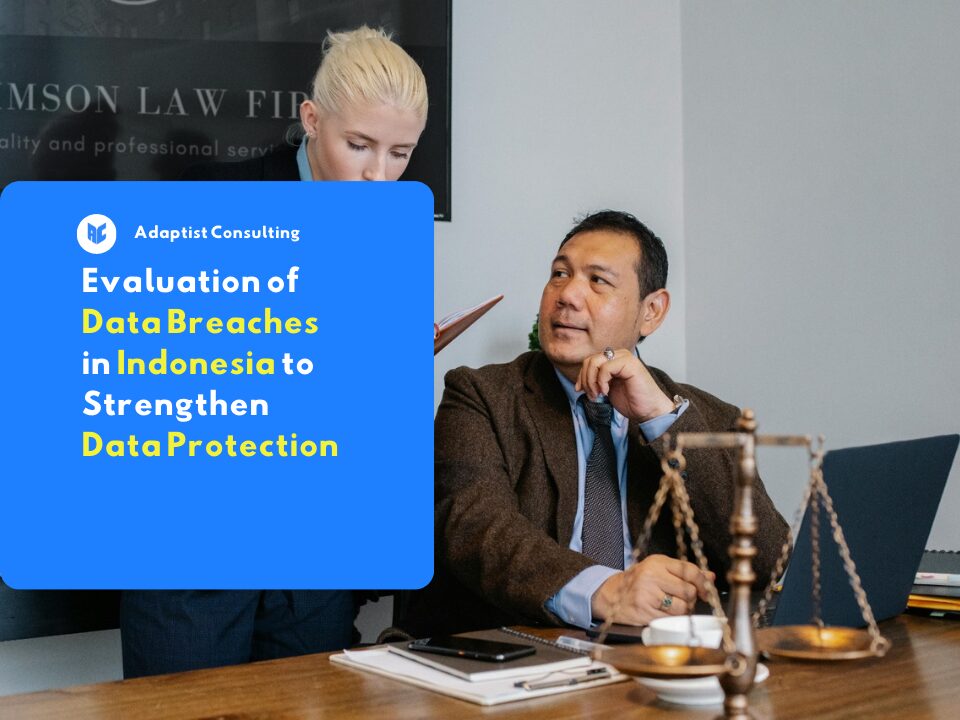
In recent years, Indonesia has experienced a series of data breach incidents involving government bodies, technology firms, and financial institutions.
These cases have highlighted an important reality: data leaks are no longer hypothetical risks but concrete threats that require structured and ongoing management.
What Is a Data Breach?
A data breach refers to a situation in which personal information is accessed, exposed, modified, or misused without proper authorization. Such incidents may stem from external cyberattacks, internal errors, or vulnerabilities within security systems.
From a business perspective, data breaches should not be treated as purely technical issues. They directly impact governance practices, customer confidence, operational continuity, and long-term sustainability.
Learn about the PDP Law
The Personal Data Protection Law (UU PDP) regulates how personal data must be managed and protected, while also defining the rights of data subjects and the responsibilities of parties that process such data.
UU PDP
Deepen your understanding and explore the provisions in detail by downloading this PDF. Your data is safe with us!
Examples of Data Breach Cases in Indonesia
Several high-profile incidents have attracted widespread public attention. One notable example is the 2020 breach involving Tokopedia, which affected millions of user accounts. Reportedly, data such as names, email addresses, and hashed passwords were circulated on online forums.
Another case involved the alleged leak of participant data managed by BPJS Kesehatan. A substantial amount of information was suspected of being sold illegally, raising serious concerns about data security and oversight.
Beyond these incidents, other breaches have affected government agencies and telecommunications providers, indicating that vulnerabilities exist across both public and private sectors when safeguards are insufficient.
A closer look at these cases reveals recurring weaknesses, including inadequate access controls, limited system monitoring, and low levels of security awareness within organizations.
The Benefits of Studying Data Breach Cases
Reviewing real-world data breach cases offers meaningful strategic insight for organizations.
First, it helps identify risks that are most relevant to specific industries and business models. Since each sector manages different categories of data, lessons learned from past incidents can serve as practical guidance.
Second, such cases often reinforce the importance of investing in stronger data protection measures. Many organizations only strengthen their defenses after witnessing or experiencing significant breaches.
Third, analyzing these incidents supports better regulatory alignment, ensuring that internal policies and practices comply with applicable legal standards.
How Data Breaches Occur and Prevention Strategies
In general, data breaches occur through three main pathways: cyberattacks, social engineering tactics such as phishing, and internal negligence.
Cyberattacks exploit technical vulnerabilities to gain unauthorized access to systems or databases. Social engineering relies on manipulating individuals into revealing sensitive information. Internal negligence may involve configuration errors, weak password practices, or unsecured data transmission.
Preventive measures should therefore include role-based access controls to limit exposure of sensitive data. Not all employees require full access to critical information.
Ongoing cybersecurity awareness training is equally important to reduce human error. Organizations should also establish clear incident response frameworks to ensure timely detection, containment, and reporting if a breach occurs.
Monitoring third-party vendors and partners is another crucial step, as external parties with system access can also become points of vulnerability.
Conclusion
Data breach incidents in Indonesia demonstrate that no organization is entirely immune, regardless of size or industry.
By learning from past events, strengthening internal safeguards, improving employee awareness, and maintaining regulatory compliance, companies can better mitigate both the likelihood and impact of future breaches.
In the digital era, data protection is more than a regulatory requirement—it is a cornerstone of trust and sustainable business operations.
Ready to Manage Privacy Compliance as a Business Risk?
See how GRC helps map personal data risks, monitor compliance with the PDP Law, and prepare companies for audits without complicated manual processes.
FAQ: Examples of Data Breaches in Indonesia
A data breach is a situation in which personal information or sensitive data is accessed, disclosed, altered, or used by unauthorized individuals or parties without proper permission.
Data breaches are generally caused by cyberattacks, social engineering tactics such as phishing, and internal negligence, including system misconfiguration or the use of weak passwords.
They can damage a company’s reputation, reduce customer trust, disrupt business operations, and lead to administrative penalties or legal consequences.
Notable cases include the data breach involving users of Tokopedia and the alleged data leak of participants managed by BPJS Kesehatan.