










Imagine a three-year loyal customer suddenly switching to your competitor, not because your product is inferior, but simply because they no longer feel valued.
This kind of situation is often dismissed as a normal part of doing business. But in reality, losing a loyal customer costs far more than it appears on the surface, because you are not just losing their next transaction, you are losing every referral, renewal, and long-term revenue they would have generated for years to come.
According to research by Bain & Company, increasing customer retention by just 5% can boost business profits by up to 95%. That means keeping the customers you already have is significantly more valuable than endlessly chasing new ones.
This is exactly what drives many companies to invest in a more personal and intentional approach to customer relationships, commonly known as customer gathering.
What Is Customer Gathering?
Think back to that opening scenario: a customer who left not because of product quality, but because they no longer felt seen. Customer gathering is the direct answer to that loss of connection.
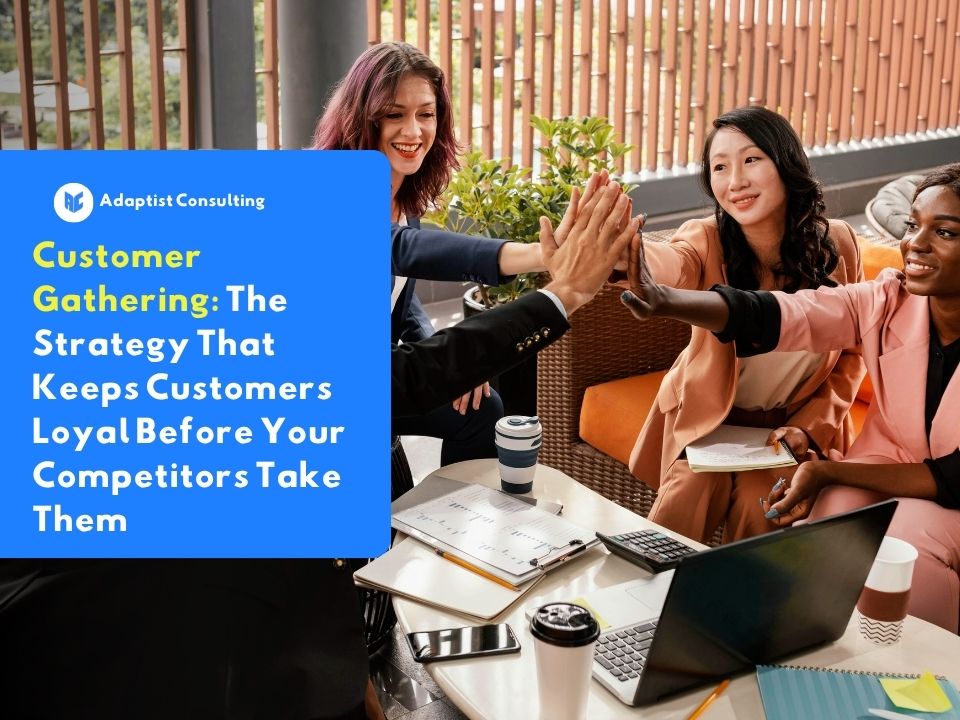
Simply put, customer gathering is a structured event that brings a company together with its customers, whether in person or virtually, with a purpose far beyond just meeting up.
The goal is to rebuild closeness, listen directly to customer needs, and create an experience that makes them feel like a valued part of your business journey.
As a real-world example, a software company once hosted an exclusive lunch for 20 of its key clients to introduce a new feature set in person. In that single session, they collected actionable feedback, renewed contracts with two clients, and received organic referrals from three others.
Why Customer Gathering Matters for Business Growth
Many businesses pour most of their budget into acquiring new customers, even though acquiring a new customer can cost 5 to 7 times more than retaining an existing one. Customer gathering offers a more cost-efficient way to keep those existing relationships warm, productive, and commercially valuable.
Here are the key reasons why customer gathering deserves a place in your business strategy:
- Improves customer retention
According to Marketing Metrics, the probability of selling to an existing customer is 60-70%, compared to just 5-20% for a new prospect. Customers who have attended a gathering tend to develop a stronger emotional connection to your brand, making them far less likely to switch to a competitor. - Builds genuine closeness and personal connection
Gathering gives both sides the space to get to know each other beyond formal business transactions. The bond formed in a relaxed, human setting creates loyalty that runs deeper than anything a discount or a pricing strategy could ever achieve. - Repairs relationships and resolves tension
Not every customer arrives with positive feelings, and a gathering is the ideal moment to address grievances openly and sincerely. Face-to-face interaction has consistently proven more effective at rebuilding trust than a carefully worded email ever could. - Creates organic upsell opportunities
In a warm, non-transactional setting, customers are far more receptive to hearing about new offerings without feeling pressured to buy. Conversations that start casually over coffee often end with business agreements that no sales pitch could have produced. - Surfaces high-quality feedback
Direct conversations tend to yield more honest and specific insights than digital surveys that are rushed through or ignored entirely. When a customer mentions something interesting in person, you can dig deeper immediately, something a feedback form simply cannot replicate. - Amplifies word of mouth
Customers who leave a gathering with a positive experience are far more likely to share it with their professional network voluntarily. This is the most credible form of marketing available, because it comes from a trusted peer rather than a paid advertisement. - Differentiates you from the competition
In a market where every business is competing on features and pricing, a memorable personal experience becomes a competitive advantage that is genuinely difficult to copy. Customers who feel a real human connection to your company are not easily swayed by a competitor offering a slightly lower price.
Strategic Goals Behind Customer Gathering That Most Businesses Overlook
Many companies host gatherings simply to maintain relationships, without realizing the deeper strategic value these events can deliver. Understanding these goals will help you design events that generate real, measurable business outcomes rather than just a nice set of event photos.
- Identifying customers at risk of churning
In direct interaction, early warning signs such as minor complaints, questions about competitors, or a noticeable drop in enthusiasm are far easier to detect than through digital data alone. Catching these signals early gives your team the window it needs to act before a customer quietly decides to leave. - Creating a sense of exclusivity and appreciation
Customers who receive a personal invitation to a curated event feel like they are part of your inner circle, and that feeling drives long-term loyalty that no cashback program can replicate. When people feel genuinely valued, they tend to reciprocate with a level of commitment that far exceeds the monetary value of any single transaction. - Accelerating decision-making
Many business deals that have been stalled for months in email threads and formal proposals can be closed in a single well-timed gathering. The informal and personal atmosphere removes the psychological friction that often blocks decisions in formal negotiation settings. - Uncovering unspoken needs
Customers often do not fully understand what they need until they sit down and talk it through in person. A gathering creates the space for those open-ended conversations, where new needs can surface naturally and directly inform your next product or service development.
Types of Customer Gathering
There is no single format that works for every business situation, because different goals require different approaches. Before choosing a format, clarify what you want to achieve and who you are inviting, so the event actually delivers the outcome you are looking for.
Networking Event
A networking event is a large-scale gathering that brings together customers, partners, and potential clients in an open and dynamic setting. This format works well for companies looking to expand their professional network while strengthening brand presence across their industry, as a single well-run event can generate dozens of meaningful new connections at once.
Workshop or Training
A workshop or training session delivers direct value to attendees in the form of practical knowledge or skills they can apply immediately after the event. For example, a software company might host a session titled “How to Maximize Automation Features for Your HR Team,” inviting 30 active users who leave feeling both more capable and more confident using the product.
Exclusive Dinner
An exclusive dinner is the most intimate format, typically involving 10 to 20 high-value customers or key accounts in a comfortable, personal setting. Its smaller scale is actually its greatest strength, as every attendee receives genuine attention and conversations can go much deeper than they would in a larger, more crowded event.
Virtual Webinar
A virtual webinar is the most cost-efficient option when budget is limited or your audience is spread across multiple cities or countries. With the right platform and a well-structured agenda, the experience can still feel engaging and personal even when every attendee joins from their own screen.
Quick Comparison: Customer Gathering Formats
| Type | Scale | Primary Goal | Best For |
|---|---|---|---|
| Networking Event | Large | Brand awareness & new connections | B2B, corporate |
| Workshop / Training | Medium | Education & product adoption | SaaS, consulting |
| Exclusive Dinner | Small | VIP customer retention | Key accounts |
| Virtual Webinar | Mass | Wide reach, cost-efficient | All segments |
How to Plan an Effective Customer Gathering
A successful gathering has nothing to do with having the most impressive venue or the most expensive catering. Everything starts with a structured plan and a clear objective, established long before the first invitation goes out.
1. Define Measurable Goals
Before selecting a venue or drafting an agenda, answer one fundamental question: “What specific outcome do I want this event to produce?” Without a clear answer, you will have no meaningful way to evaluate whether the time and budget invested were actually worth it.
For instance, rather than setting a vague goal like “strengthen customer relationships,” reframe it as something concrete such as “schedule at least five follow-up meetings within seven days of the event” or “introduce the new feature to 30 active users.” A measurable goal guides every decision that follows, from who to invite to how to structure the agenda.
2. Segment Your Guest List Carefully
Do not invite every customer in your database just because their contact information is available, because the same message will not be relevant to everyone. Select attendees based on segments that genuinely align with the purpose of the event — for example, if the goal is to upsell to a premium tier, invite customers who have been actively using the basic plan for at least six months.
Picture a consulting firm that hosts an exclusive dinner for 15 clients, but half of them are dormant accounts and the other half are prospects who have never transacted. Conversations at the table become scattered, and not a single deal closes in the weeks that follow — a costly outcome that could have been avoided with a more deliberate guest selection process.
3. Design an Agenda That Delivers Real Value
Every session in your agenda should have a clear purpose and leave attendees with something genuinely useful, whether that is a new insight, a solution to an existing problem, or a valuable connection with a fellow attendee. Avoid packing the schedule with one-directional presentations, because people who attend gatherings want dialogue, not just slides.
A simple rule of thumb: allocate roughly one third of the event time to content or presentations, one third to open discussion and Q&A, and one third to free networking. This balance keeps attendees engaged throughout while still ensuring they walk away with substantive takeaways.
4. Set Success Metrics Before the Event Begins
Define your indicators of success well in advance, not after everything is over, because post-event metrics tend to be shaped by how things felt rather than what actually happened.
Useful metrics include attendance rate relative to invitations sent, the number of follow-up meetings scheduled afterward, or a satisfaction score collected through a brief post-event survey.
A straightforward example: if you invite 25 people and target an 80% attendance rate, you are aiming for at least 20 attendees. If only 12 show up, that is a signal worth investigating — whether the issue lies in how invitations were communicated, how relevant the event theme was, or when the event was scheduled.
Post-Gathering Follow-Up Strategy
A gathering that ends without structured follow-up is like planting seeds without watering them — the potential is there, but nothing will grow from it. The right follow-up is what turns the warmth and momentum of the event into real, measurable business results.
Here are the follow-up steps to put in place immediately after the event:
Send a personal thank-you message within the first 24 hours
A thoughtful, individualized message sent quickly will make attendees feel appreciated while the experience is still vivid. Avoid generic mass messages, as they will undo exactly the personal connection you worked to build during the event itself.
Share a relevant summary or key takeaways
If the event featured presentations, insights, or notable discussions, send a recap to attendees as an additional value-add they can keep and reference. This also creates a natural reason to reopen the conversation after the event has ended.
Schedule follow-up meetings with interested attendees
Do not let the opportunities that emerged during the event fade because no one took the initiative to follow through. Reach out to anyone who expressed interest in a product or service within a maximum of three days after the event.
Request brief and specific feedback
A short survey of three to five targeted questions sent within 48 hours will receive far more responses than a lengthy form that feels like a homework assignment. Use the results as material for improving the quality and impact of your next gathering.
Document every insight and data point into your system
Every piece of information that surfaced during the event, from complaints and unmet needs to signals of purchase intent, needs to be recorded and managed properly so it does not simply disappear. This is precisely why a structured customer management system is a critical component of any consistent and scalable customer gathering program.
How to Measure the Success of a Customer Gathering
Many companies wrap up a gathering without seriously evaluating what it actually produced. Proper measurement is what separates a one-time event from a repeatable, improving program that compounds value over time.
| Success Metric | What Is Measured | How to Measure | Example Target |
|---|---|---|---|
| Attendance Rate | How many invited guests actually attend | Number of attendees ÷ total invitations × 100% | Minimum 80% attendance |
| Participant Engagement | Enthusiasm and involvement during the event | Number of participants asking questions, joining games, polls, or discussions | 50% of participants actively engage |
| Participant Satisfaction | Overall participant rating of the event | Post-event survey (scale of 1–10) | Average score of 8/10 |
| Net Promoter Score (NPS) | Willingness to recommend the brand/event to others | Ask: “How likely are you to recommend us to others?” | Positive score / above 30 |
| Number of Leads / Business Opportunities | Potential sales or partnerships after the event | Count new prospects, demo requests, or follow-up meetings | 10+ new leads |
| Follow-up Rate | Success of post-event follow-up communication | Number of participants responding to follow-up emails/messages | 40% response rate |
| Post-Event Sales | Direct revenue impact after the event | Number of purchases or transactions from attendees | Increase by 15% within 1 month |
| Customer Retention | Customer loyalty after the gathering | Percentage of customers who remain active or reorder | 10% increase in repeat orders |
| Social Media Engagement | Event impact on social media channels | Mentions, tags, shares, comments, or attendee posts | 100+ interactions |
| Event ROI (Return on Investment) | Whether results justify the event cost | (Profit from event – event cost) ÷ event cost × 100% | Positive ROI |
As a concrete illustration: if 25 people attended your gathering and 8 of them scheduled a follow-up meeting within the following week, your gathering achieved a 32% conversion rate — a strong result for any customer relationship event.
Conclusion
Customer gathering is not a ceremonial event designed to spend budget and fill a quarterly calendar. It is a strategic investment in loyalty, deeper customer understanding, and business opportunities that will never emerge through email campaigns or digital advertising alone.
To manage attendee data effectively, send timely follow-ups, and track the real impact of every gathering you run, you need a system that is organized and built for purpose.
Adaptist Prose by Adaptist Consulting is a customer engagement management solution designed to help businesses manage the full cycle of customer relationships, from pre-event preparation through to post-gathering evaluation and follow-up.
Optimize Your Customer Service
Schedule a demo of Adaptist Prose and see how an integrated ticketing system helps bring tickets, conversations, and customer data together in a single dashboard. With a more structured workflow, teams can respond faster, reduce operational burden, and maintain consistent service quality as the business grows.
FAQ
There is no fixed number because it depends heavily on scale, format, and location. The most important principle is to align your budget with the realistic business value you expect the event to generate.
Ideally two to four times per year, adjusted to your business cycle and customer needs. Too frequent and it becomes a burden; too infrequent and the relationships start to cool.
Absolutely, and smaller businesses often have an advantage because they can make the experience feel more personal and intimate. A casual coffee session with five loyal customers already qualifies as an effective customer gathering.
A customer event tends to be larger, more one-directional, and open to the general public. A customer gathering is more exclusive, conversational, and focused on building personal relationships with a selected group of customers.
The answer lies in having a clear goal and pre-defined metrics before the event begins. Without a target outcome to work toward, any gathering risks feeling like a pleasant occasion with no lasting business impact.