









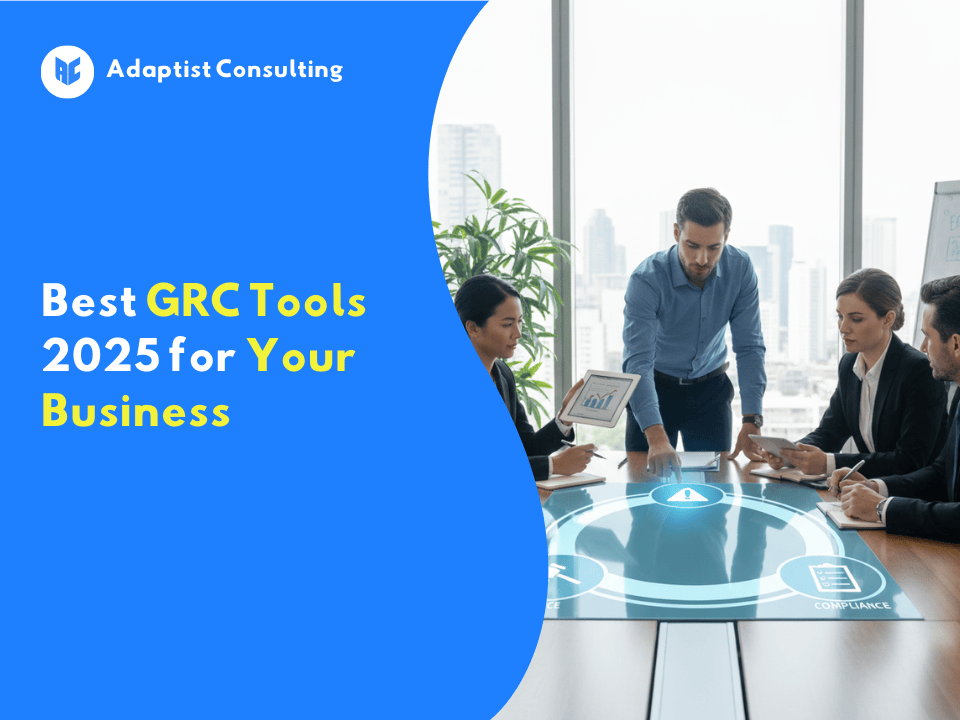
As regulations continue to evolve, businesses need to be better prepared to manage risk and compliance. With the support of the best GRC tools in 2026, organizations can simplify governance processes while keeping operations secure and compliant.
What Are GRC Tools & Platforms?
GRC tools are technology solutions designed to help organizations manage key processes such as internal audits, risk identification and assessment, tracking regulatory changes, and preparing compliance reports. Meanwhile, more comprehensive GRC platforms go beyond day-to-day operations by providing a holistic view of an organization’s governance framework. With clearer visibility into risks and compliance status, companies can make faster, more informed decisions while staying aligned with long-term business objectives.
Why Are GRC Tools Important?
As regulations continue to grow more complex, managing GRC using spreadsheets or manual methods is no longer sufficient. These approaches are prone to inconsistencies, difficult to monitor, and can easily create gaps in compliance. This is why GRC tools have become increasingly important for organizations.
1. Automation and Efficiency, GRC tools help reduce the time spent on audits, reporting, and documentation through automated processes.
2. Comprehensive Risk Visibility, Risks across different business units can be monitored from a single, centralized dashboard.
3. Maintained Compliance, GRC tools track regulatory changes and provide alerts when the organization is no longer aligned with required standards.
4. Data-Driven Decision Making, Insights generated by GRC tools enable leaders to build stronger, more informed business strategies.
Benefits of Using GRC Tools
Choosing the best GRC tools is not just about following a trend, it is a strategic investment for an organization’s long-term stability. By implementing GRC tools, companies can gain several key benefits:
1. Real-Time Monitoring, organizations can monitor potential risks and compliance status in real time, without relying on delayed manual reports.
2. Cross-System Integration, GRC tools can integrate with existing systems such as ERP, HRIS, or other business platforms, ensuring data consistency and making risk management processes more efficient.
3. Audit Transparency & Documented Evidence, all audit activities and compliance evidence are properly documented and stored, making evaluations and inspections easier whenever they are required.
4. Effective Cross-Department Collaboration, with a single, centralized data source, teams across different departments can collaborate more effectively without miscommunication or duplicated work.
5. Reduced Errors & Manual Workload, automation helps minimize errors caused by manual processes, allowing teams to focus more on strategic initiatives rather than routine task.
Beyond improving operational efficiency, GRC tools also help organizations minimize overlooked risks and prevent potential penalties resulting from regulatory non-compliance.
Best GRC Tools 2026 for Business Needs
Below are recommended best GRC tools for business needs that are widely considered for 2026, ranging from startups to large enterprises—complete with their strengths and limitations to help you choose the most suitable solution:
1. Adaptist Privee – Integrated GRC Platform
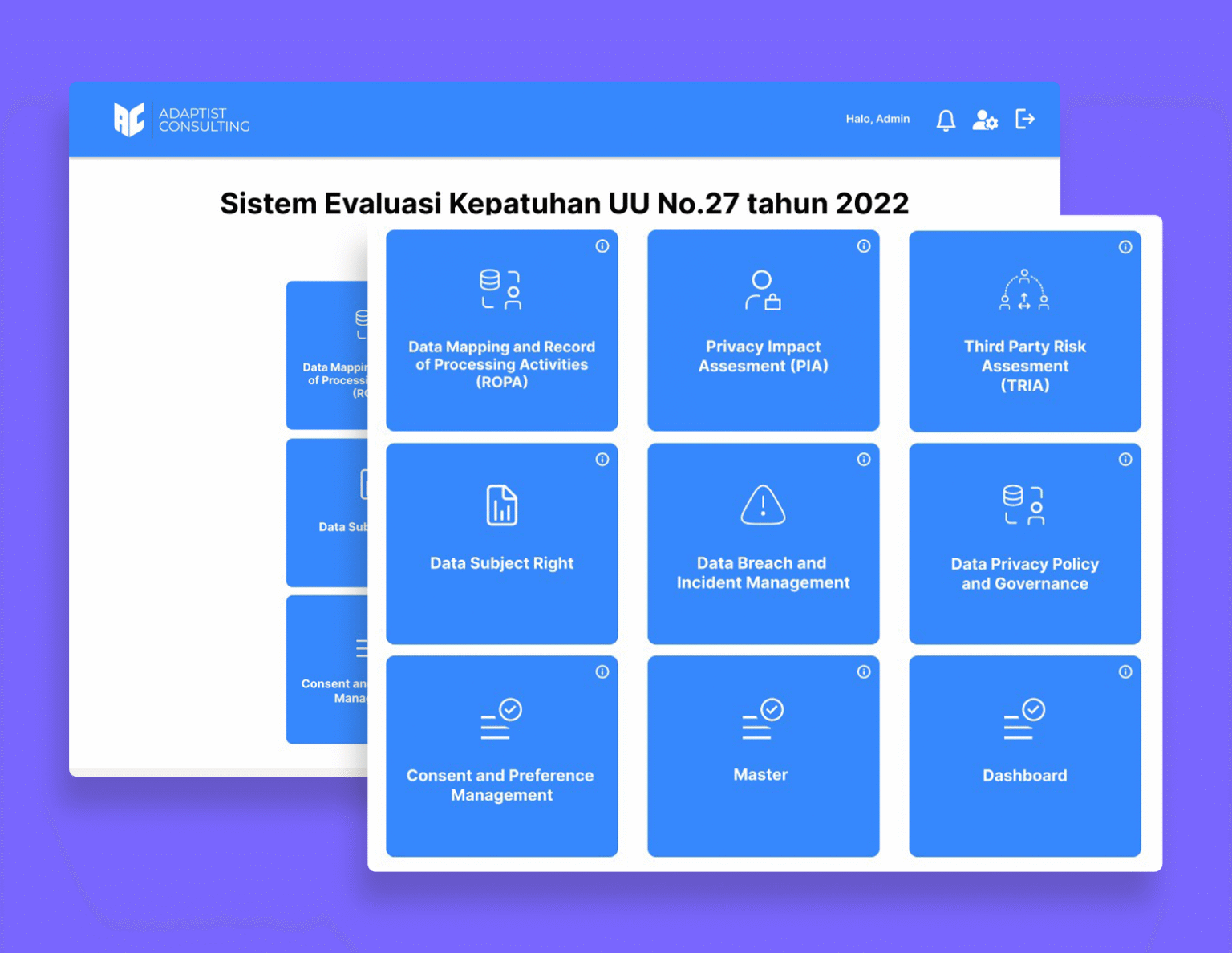
Adaptist Privee is a modern GRC platform designed specifically for businesses in Indonesia. This platform helps organizations comply with the Personal Data Protection Law (UU PDP No. 27 of 2022) while managing privacy, risk, and regulatory compliance within a single, integrated system.
Key Features of Adaptist Privee:
- Privacy Impact Assessment (PIA): Evaluates privacy risks before launching new projects or systems.
- ROPA (Records of Processing Activities): Visualizes data flows to support transparency and regulatory compliance.
- Third-Party Risk Assessment: Assesses vendor risks and helps maintain data security across the entire supply chain.
Adaptist Privee is well-suited for medium to large enterprises that must strictly comply with local regulations while maintaining customer trust.
Advantages of Adaptist Privee:
- Designed to meet the needs of businesses operating in Indonesia, including compliance with the Personal Data Protection Law (UU PDP).
- Integrated GRC features such as risk assessment, compliance management, and policy documentation.
- A clean and intuitive dashboard that is easy to understand for users at different organizational levels.
- Local support that simplifies implementation and ongoing guidance.
Limitations of Adaptist Privee:
- Primarily focused on Indonesian regulations, which may require additional customization for global compliance needs.
2. MetricStream – Compliance Automation GRC
MetricStream is one of the global leaders in GRC solutions. The platform offers real-time dashboards, AI-driven risk analytics, and comprehensive audit and policy management features. As a result, MetricStream is well suited for large organizations that require an enterprise-grade GRC solution.
Advantages of MetricStream:
- Recognized as one of the leading GRC brands at the enterprise level.
- Comprehensive features covering risk management, auditing, and governance policies.
- Supports multiple global frameworks such as ISO, COSO, SOX, and others.
- Ideal for large organizations with complex operational structures.
Limitations of MetricStream:
- Pricing and implementation complexity can be high for small and medium-sized businesses.
- Configuration and daily use often require dedicated teams and longer implementation time.

3. Drata – Compliance Automation GRC
Drata focuses on compliance automation. This tool is popular among startups and mid-sized companies because it automates evidence collection efficiently. In addition, Drata supports multiple compliance frameworks such as SOC 2, ISO 27001, HIPAA, and GDPR, enabling faster and more streamlined audit processes.
Advantages of Drata:
- Strong focus on automating compliance evidence collection, including SOC 2, ISO 27001, and GDPR.
- Fast implementation with a user-friendly interface.
- Well-suited for startups and mid-sized companies.
Limitations of Drata:
- Enterprise-level features are still limited compared to larger GRC platforms.
- Less optimal for organizations with complex governance and risk management needs.
4. ServiceNow GRC – Workflow & Risk Management
ServiceNow GRC is directly integrated with the ServiceNow ecosystem, making it easier for organizations that already use the platform. Its key strengths include automated workflows, incident management, and efficient compliance reporting. In short, ServiceNow helps simplify large-scale risk oversight.
Advantages of ServiceNow:
- Seamless integration with other ServiceNow modules.
- Ideal for organizations already using the ServiceNow platform.
- Highly flexible workflow management capabilities.
Limitations of ServiceNow:
- Steep learning curve for new users.
- Less efficient for small-scale organizations.
5. AuditBoard – GRC Audit Management Tool
AuditBoard is well known for its user-friendly interface and strong focus on audit management. This tool helps internal audit teams manage compliance, risk assessments, and documentation more efficiently. As a result, audit team productivity can improve significantly.
Advantages of AuditBoard:
- Simplifies audit documentation and reporting processes.
- Very strong for internal audit and control management needs.
- Widely used by professional audit teams across various industries.
Limitations of AuditBoard:
- Less suitable if the primary focus is broad risk management and multi-regulatory compliance.
- Does not fully cover all aspects of end-to-end GRC.
6. Vanta – Continuous Monitoring GRC
Vanta is a favorite compliance tool among startups because it supports continuous monitoring of system security. Automated compliance controls speed up external audits. For this reason, many early-stage companies choose Vanta to strengthen security from the start.
Advantages of Vanta:
- Widely used for SOC 2 and ISO 27001 compliance requirements.
- Simple and user-friendly interface.
- Continuous monitoring for security and compliance.
Limitations of Vanta:
- Less flexible for cross-industry GRC needs.
- More focused on compliance rather than comprehensive governance.
7. StandardFusion – Modern GRC Platform
StandardFusion provides a modern GRC platform suitable for SMEs to enterprises. Its key features include risk management, vendor management, and multi-framework compliance integration. Thus, StandardFusion is a versatile option for growing businesses.
Advantages of StandardFusion:
- Designed as a flexible GRC platform that can be adapted to organizations of various sizes, from small businesses to large enterprises.
- Supports multiple compliance frameworks such as ISO, NIST, and others within a single centralized dashboard.
- Easy integration with existing internal company systems.
- User-friendly interface that simplifies adoption across teams.
Limitations of StandardFusion:
- Less well-known compared to larger, more established GRC brands.
- Some features require additional configuration or paid modules.
- Not as strong as other platforms when it comes to advanced automated reporting.
Read Also: Mengapa Banyak Organisasi Gagal Mengelola GRC dengan Efektif
Tips for Choosing the Best GRC Tools
Choosing the best GRC tools should not be done carelessly. Before making a decision, consider the following factors to ensure the solution truly fits your organization’s needs:
- Organization size → Startups need tools that are quick to implement (e.g., Drata or Vanta). On the other hand, enterprises are better suited with MetricStream, ServiceNow, or Adaptist Privee.
- Compliance frameworks → Ensure the tool supports frameworks relevant to your business (SOC 2, ISO, HIPAA, PCI DSS, etc.).
- System integration → Choose tools that connect with your existing ERP, CRM, or IAM systems.
- User experience → A simple interface accelerates team adoption and boosts productivity.
If your organization wants to strengthen governance, risk, and compliance management comprehensively, try Adaptist Privee — a GRC platform designed for businesses in Indonesia.
Conclusion
Choosing the right GRC platform and tools is a strategic investment that can save time and money. There are many best GRC tools 2026 available, from MetricStream, Drata, ServiceNow, to Adaptist Privee. Each platform offers unique strengths depending on organizational needs. By choosing the right tool, companies can manage risks, improve compliance, and ensure better governance. Ultimately, this decision helps businesses remain competitive in the digital era.
FAQ: Best GRC Tools 2026
What are GRC Tools?
GRC tools are platforms that help organizations manage governance, risk, and compliance in an integrated and automated way.
How do you choose the best GRC tools?
Consider your company’s needs, supported compliance frameworks, system integrations, and user experience to help you select the best GRC tools for 2026.
Is Adaptist Privee suitable for my business?
Adaptist Privee is well suited for businesses that need to comply with Indonesian regulations such as the Personal Data Protection Law (UU PDP), while also managing risk and compliance within a single platform.