









6 Mistakes in Setting Ticket Priorities in Customer Service
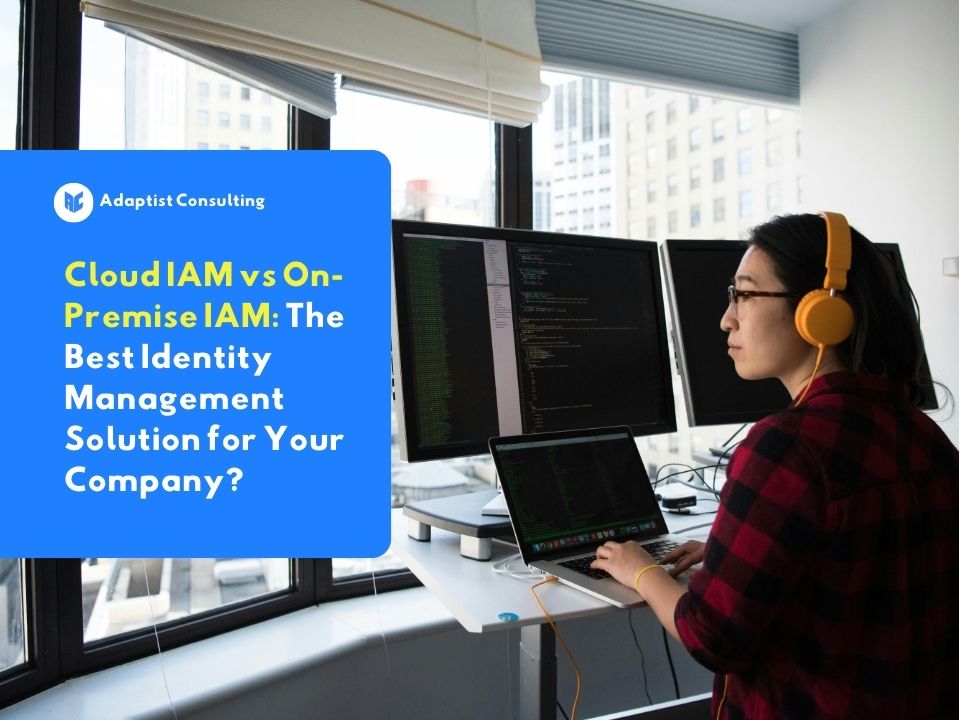
March 4, 2026Cloud IAM vs On-Premise IAM: The Best Identity Management Solution for Your Company?
In the era of digital transformation, identity is the new security perimeter you must protect. Every employee, partner, and system accessing corporate resources requires strict and efficient access verification. However, the strategic decision is often confusing: is it better to build and manage identity management infrastructure within your own data center (On-Premise), or adopt a cloud-based service (Identity as a Service)?
The cloud IAM vs on-premise IAM debate is not just about technology trends, but concerns security architecture, long-term cost efficiency, and regulatory compliance. As a decision-maker in the company, you need to deeply understand the characteristics of both models before determining your technology investment direction.
What Is On-Premise IAM?
On-Premise Identity and Access Management (IAM) is security infrastructure hosted entirely on the company’s local physical servers. All hardware and software components are operated directly by your internal IT team.
This model places the entire employee identity data center behind the organization’s closed network firewall. This traditional architectural approach complies with the strictest security standards in highly regulated industries.
With a local system, full responsibility from server configuration to patching system vulnerabilities lies in your hands. This certainly demands a continuous allocation of technical resources.
Read also : What is Identity and Access Management (IAM)
Benefits of Using On-Premise IAM
Independent infrastructure brings a number of strategic advantages to your confidentiality-focused business operations. Understanding these positive sides is crucial before you allocate a budget for system implementation.
1. Absolute Control
With an on-premise solution, you hold full control over data and infrastructure. No third party can access your identity repository without permission. This allows you to implement highly specific security policies, tailor authentication mechanisms to internal standards, and conduct comprehensive audits whenever necessary.
For companies with mature security teams, this level of control provides peace of mind as there is no need to rely on the security practices of external vendors.
2. Centralized Data Compliance (Data Sovereignty)
Regulations like GDPR in Europe or the PDP Law in Indonesia require citizens’ personal data to be stored within specific jurisdictions. On-premise IAM facilitates compliance because identity data never leaves the company’s geographic boundaries. You can determine exactly which server rack the data is stored on and how it is protected. This aspect is highly crucial for industries like banking, hospitals, or government agencies facing strict audits.
Read also : Differences Between GDPR, CCPA, and the PDP Law
3. Performance Without Internet Latency
Credential authentication occurs directly within the company’s local network without needing to call external servers. You will not experience system access disruptions even if the public internet connection goes down. The daily login process to your internal business applications will run instantly and stably.
Read also : Adaptive Authentication? Definition, How It Works, and Examples for Business
What Is Cloud-Based IAM (IDaaS)?
Cloud-Based IAM, often called Identity as a Service (IDaaS), is an identity management solution provided and managed by a vendor through a subscription model. The entire server infrastructure, database, and software run in the vendor’s data center, while you access it via the internet to manage users and policies.
In this model, the vendor is responsible for system availability, security updates, and compliance with industry standards. Your company simply integrates this service with existing user directories, connects it to the applications used, and starts managing access through a centralized web-based dashboard.
This approach is becoming increasingly popular along with the widespread adoption of SaaS applications and the need to support a remote workforce. IDaaS allows employees to access corporate resources from anywhere with a consistent experience, as long as they have an internet connection.
Benefits of Using Cloud-Based IAM
Cloud-based services offer a new paradigm in terms of IT efficiency and modernization. This solution presents adaptive advantages that are difficult to match by traditional local architectures.
1. Flexible Costs (OpEx)
You only pay according to the number of active users or feature modules used each month. This Operational Expenditure (OpEx) model frees your company from the burden of depreciating IT hardware assets. The IT department budget becomes much easier to predict and manage efficiently.
2. Instant Scalability
Adding or reducing thousands of user licenses can be done with just a few clicks in the admin dashboard. You no longer need to worry about bandwidth capacity limits or physical server procurement at all. This elastic solution is highly ideal for companies undergoing aggressive operational expansion.
3. Remote Worker Support & SaaS Integration
IDaaS systems are inherently designed to secure access from any location and any device. You can easily integrate it with thousands of popular Software-as-a-Service (SaaS) applications. This high flexibility is a critical foundation for designing a Single Sign-On (SSO) architecture.
Main Comparison: Cloud IAM vs On-Premise IAM
To facilitate strategic decision-making, you need to compare these two architectures side by side. Here are the critical comparison metrics that must be considered by executives.
| Comparison | On-Premise IAM | Cloud-Based IAM (IDaaS) |
|---|---|---|
| Cost Model | CapEx (High initial capital for physical hardware and permanent system licenses). | OpEx (Highly predictable monthly or annual license subscription costs). |
| Security & Visibility | Full internal control, depending on the specialized cybersecurity expertise of the local team. | Managed global security standards, but limited control over base infrastructure modifications. |
| System Maintenance | Full operational burden on the internal IT team for patching, upgrades, and fixes. | Automatically managed by the vendor continuously without operational downtime. |
| Implementation Time | Takes months for device procurement, installation, and configuration. | Completed in days to weeks through policy configuration and API integration. |
| Scalability Capacity | Very rigid and slow as it always requires purchasing additional hardware devices. | Instant and elastic as capacity can be adjusted anytime via the dashboard. |
Read also : 10 Best IAM Solution Recommendations in 2026
When Should a Company Choose Cloud or On-Premise?
There is no single perfect solution for all companies. The decision between Cloud IAM and On-Premise IAM must be determined through a thorough evaluation of the risk profile, regulatory obligations, technology architecture, and long-term digital transformation strategy.
Simply put, the on-premise approach provides full control over infrastructure and data because the entire system runs in the company’s own data center. Meanwhile, the cloud approach offers flexibility, scalability, and operational efficiency because it is managed by a cloud computing-based service provider.
For non-technical readers, the difference can be analogized to choosing between building your own house (on-premise) and renting a fully furnished apartment (cloud). Both can be equally secure and reliable, but needs, budget, and long-term goals will determine the best choice.
Choose On-Premise IAM if:
This approach is more appropriate for organizations requiring absolute control over sensitive infrastructure and data. Usually, this decision is driven by compliance factors, legacy system architecture, and advanced customization needs.
- Your company operates in highly regulated industries like banking, insurance, or healthcare that mandate data remains within the country or under the company’s physical control.
- You have a large and experienced internal IT team capable of managing complex infrastructure, performing patch management, and responding to security incidents independently.
- Core business applications run in internal data centers and are not directly connected to the internet, so cross-cloud authentication integration provides no significant added value.
- The company requires deep customization of access policies, approval workflows, or integrations with legacy systems that are difficult to fulfill with standard cloud solutions.
Choose Cloud IAM if:
This approach is ideal for organizations that prioritize implementation speed, scalability, and operational efficiency without having to build and maintain their own infrastructure.
- The company is experiencing rapid growth and does not want to be hindered by time-consuming server procurement and infrastructure installation processes.
- Most employees work remotely or hybrid, requiring secure access from various locations and devices through modern authentication mechanisms (e.g., MFA and Single Sign-On).
- The corporate application portfolio is dominated by SaaS services, which require fast integration and centralized identity management.
- Management wants the IT team to focus more on innovation and business development, instead of being consumed by technical routines like server patching, infrastructure monitoring, and capacity management.
Conclusion
Choosing between cloud services and local infrastructure is a strategic decision that determines your digital defense posture. Carefully evaluate the operational team’s readiness, flexible budget availability, and the direction of your technology transformation. There is no absolute perfect IT architecture to answer every business operational scenario.
For most modern corporations, ease of cross-platform integration and automatic scalability have become competitive imperatives. Current global security regulatory standards increasingly drive system automation to minimize manual errors. Ensure you embrace a platform infrastructure that simplifies the complexity of managing such operational security.
Adaptist Prime answers the challenge of securing access amidst the complexity and multitude of applications by integrating Identity and Access Management (IAM) and Identity Governance and Administration (IGA) capabilities into one holistic platform. Through features like Single Sign-On (SSO) and Threat Insight, organizations can strengthen authentication controls, increase visibility into potential threats, and significantly reduce data breach risks.
Ready to Manage Digital Identities as a Business Security Strategy?
Request a demo today and discover how IAM solutions centralize user logins through Single Sign-On (SSO), automate employee onboarding, and protect company data from unauthorized access without disrupting productivity with repeated logins.
In addition, automated identity and access management helps reduce administrative burdens including password reset requests so IT teams can focus more on strategic initiatives. With the support of Adaptist Prime, compliance and security are no longer just obligations, but competitive advantages that drive efficiency and access governance maturity in your company.
FAQ
Cloud service architecture providers invest heavily in global standard security and the latest encryption. However, ultimate security still depends on your company’s access policy and password configuration. The biggest weakness often lies in end-user negligence in guarding their credentials.
Absolutely, but the integration process is often complex and requires manual installation of additional connectors. You may need a dedicated authorization gateway to connect your infrastructure to public networks. This certainly adds a layer of system maintenance burden for your internal IT team.
System migration duration varies widely, generally ranging from a few weeks to a few months. This depends on the number of active users, directory complexity, and the number of linked applications. Mature data mapping planning is highly crucial to prevent downtime disruptions.
This phenomenon occurs when your company becomes highly dependent on one specific technology service provider. You find it difficult to migrate due to high re-integration costs and data transfer complexity. System policies already structured on one platform are not always easily exported to a competitor.
Of course, because modern cyberattacks today no longer only target giant multinational corporate entities. Mid-sized companies are often hacking targets because their security systems are typically much looser. You need a system to secure sensitive data with a measurable operational budget allocation.