









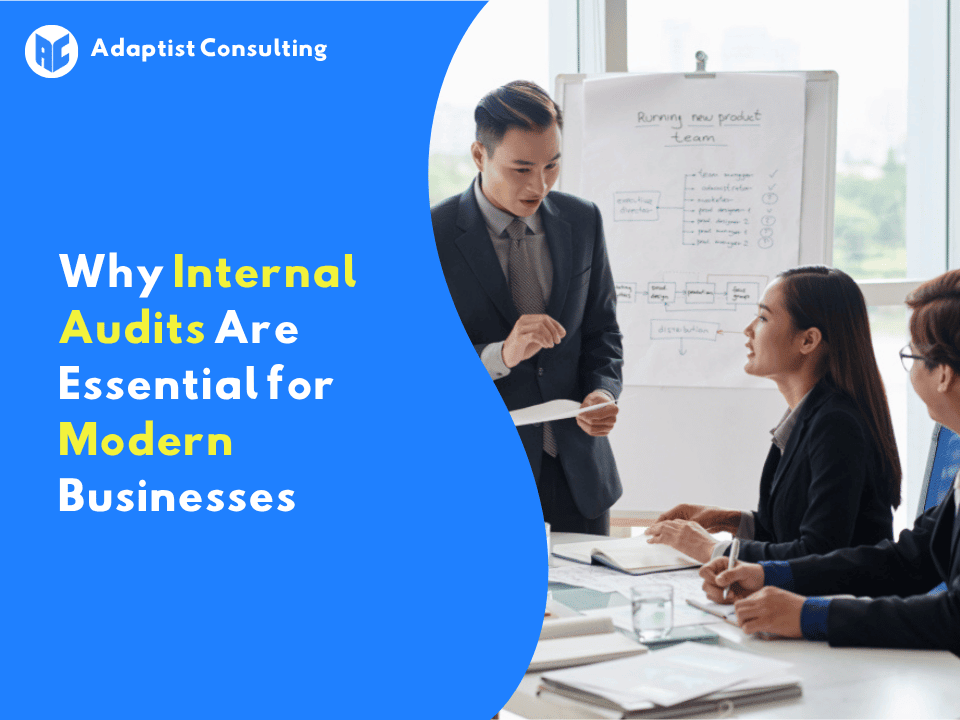
In an increasingly complex, dynamic, and uncertain business environment, company growth is often accompanied by increased risk.
These range from operational, regulatory compliance, and financial risks to reputational risks. Amid the pressure to innovate and grow, strong internal oversight becomes a strategic necessity for every organization.
This is where internal audit comes in as a valuable partner for management and the board of directors to ensure the organization not only grows, but grows with a healthy, controlled, and sustainable foundation.
What Is Internal Audit?
Internal audit is an independent and objective function designed to assess the effectiveness of three main pillars: corporate governance, risk management processes, and internal controls.
From a business perspective, internal audit functions as a control mechanism to ensure that the company operates in line with its strategic objectives.
The role of internal audit is no longer merely that of a “book checker” or “fault finder.”
Internal audit positions itself as a strategic partner that helps management understand areas with the potential to cause loss, inefficiency, or risk before those risks actually materialize.
Therefore, internal audit becomes an integral part of a healthy company’s Governance, Risk, and Compliance (GRC) framework.
Differences Between Internal Audit and External Audit
Many still equate these two audit functions, even though their differences are fundamental in terms of objectives, scope, and business impact.
| Aspect | Internal Audit | External Audit |
|---|---|---|
| Main Objective | To improve the effectiveness of operations, risk management, and governance. | To provide an opinion on the fairness of financial statements. |
| Scope | Very broad and can cover all aspects of business: Operational, IT, Compliance, HR, Finance, Projects, Governance, and others. | Limited to evidence supporting financial statements and areas that have a material impact on finances. |
| Stakeholders | Management and the Board of Commissioners/Directors (especially the Audit Committee). | Shareholders, Investors, Creditors, and Regulators (external parties). |
| Business Impact | Direct and operational. Internal audit recommendations can change processes, reduce costs, prevent fraud, and improve efficiency. | Limited to the credibility of financial statements. It builds market confidence but rarely addresses day-to-day operational improvements. |
| Frequency | Continuous and flexible, based on an annual plan approved by management. | Periodic, usually annual following the financial reporting cycle. |
Example: A manufacturing company.
The external audit will ensure the inventory value on the balance sheet is presented correctly. An internal audit, on the other hand, will evaluate the entire chain of inventory management processes, from purchasing, receiving, storage, to issuance, to identify risks of loss, inefficiency, or fraud, and recommend system improvements.
The Function of Internal Audit
The internal audit function can be summarized into three interrelated key roles:
- Assurance Function: Provides independent assurance to management and the board that the internal control system, risk management, and corporate governance processes are operating effectively.
- Evaluation and Consulting Function: Internal audit also acts as an internal consultant. They evaluate the feasibility of a new process, provide input before implementing an ERP system, or help business units identify risks in expansion projects. The goal is to prevent problems before they occur.
- Improvement Catalyst Function: Through evidence-based and in-depth recommendations, internal audit drives continuous improvement. They act as a catalyst that encourages positive organizational change.
The internal audit function is inseparable from the GRC (Governance, Risk, and Compliance) framework. It serves as a bridge that helps organizations ensure governance principles are applied, risks are properly managed, and regulatory compliance is maintained.
Objectives of Internal Audit
Understanding internal audit objectives from a business perspective helps eliminate the negative stigma often associated with it.
- Maintaining Compliance and Corporate Governance: Ensuring the company operates in accordance with laws, regulations (such as the PDP Law), internal policies, and business ethics. This protects the company from legal fines, regulator sanctions, and reputational damage.
- Identifying Risks Early: Before risks escalate into financial losses or operational crises, internal audit helps detect them. For example, identifying weaknesses in cybersecurity controls before an attack occurs, or assessing the risk related to dependency on a single key supplier.
- Supporting Management Decision-Making: Internal audit reports present objective data and facts about operational conditions. This information becomes a strong basis for directors and management to make strategic decisions, such as technology investments, process restructuring, or establishing new policies.
- Improving Operational Effectiveness and Efficiency: By evaluating business processes, internal audit often finds opportunities to simplify workflows, eliminate waste, and optimize the use of resources, ultimately increasing profitability.
- Preventing and Detecting Fraud (Fraud): The presence of a competent and independent internal audit acts as a strong deterrent against potential fraud. Regular audit processes also increase the chance of detecting suspicious activities at an early stage.
Learn about the PDP Law
The Personal Data Protection Law (UU PDP) regulates how personal data must be managed and protected, while also defining the rights of data subjects and the responsibilities of parties that process such data.
UU PDP
Deepen your understanding and explore the provisions in detail by downloading this PDF. Your data is safe with us!
Why Modern Internal Audit Requires a Centralized System
As business complexity increases, internal audit is no longer sufficient to be run with only manual procedures and documentation.
Large volumes of data, cross-functional processes, and increasingly stringent compliance demands make traditional approaches inefficient and difficult to control.
In practice, many internal audit functions face challenges such as scattered documentation, unintegrated audit evidence, and limited visibility into the follow-up status of audit findings.
As a result, the same risks can reappear in the next audit cycle, even though they were previously identified.
Modern internal audit requires a system capable of connecting audit processes, risk management, and compliance within one consistent framework.
A centralized system enables internal audit to function continuously rather than merely as a periodic activity, while also providing management and the board with a comprehensive view of the organization’s control environment.
Steps to Implement Internal Audit
Conceptually, a high-quality internal audit process consists of four cyclical and sequential stages:
1. Planning
This stage determines the value of an audit. Auditors do not examine randomly; instead, they apply risk-based auditing.
They discuss with management to identify high-risk areas within the organization (e.g., areas with large transaction volumes, complex processes, or a history of issues).
From this, an annual audit plan is developed and approved by the Audit Committee/Board. For each assisment, auditors study business processes, define audit objectives, and prepare an audit program.
2. Execution (Fieldwork)
At this stage, auditors gather evidence through interviews with staff and management, direct observation, and examination of documents/sample transactions.
The focus is on testing the effectiveness of existing internal controls. Open and collaborative communication with auditees (the unit being audited) is crucial for gaining a comprehensive understanding.
3. Reporting
Audit findings are analyzed and summarized in an official report. A good report not only highlights weaknesses but also acknowledges good practices identified.
Each finding is accompanied by specific, actionable, and business-valuable recommendations. The draft report is then discussed with the auditee’s management for clarification before finalization, ensuring accuracy and acceptance.
4. Follow-Up
The audit cycle does not end when the report is issued. This critical stage ensures that agreed-upon recommendations are actually implemented by management.
Auditors will perform a follow-up review after a certain period to verify corrective actions. This is done to ensure the audit creates real value.
In many organizations, the biggest challenge actually arises at this follow-up stage.
Audit recommendations may be documented in the report, but their implementation and monitoring are unstructured, scattered in separate emails or spreadsheets, allowing the same risks to reemerge in the next audit cycle.
Challenges in Implementing Internal Audit
Although its benefits are clear, implementing an effective internal audit function often faces the following obstacles:
1. Lack of Top Management Support
If the board of directors and senior management view audit as a burden or formality, the function will lack sufficient authority and resources to operate effectively.
2. Resistance from Business Units
The stigma of audit as a “fault-finding” activity leads units to become defensive, withhold information, and be uncooperative. This hinders the process and reduces the quality of findings.
3. Resource Limitations
Internal audit requires professionals with strong technical expertise and soft skills (communication and analytical abilities). Many organizations struggle to recruit or retain qualified internal auditors.
4. Audit is Considered a Mere Formality
The audit function is often seen only as an “attachment” or “check-the-box” to meet stock exchange listing requirements or investor demands, without real commitment to fixing findings. This is a waste of resources and a signal of poor governance.
The Role of GRC Platforms in Strengthening Internal Audit
Internal audit is an integral part of the Governance, Risk, and Compliance (GRC) framework.
Without adequate GRC system support, internal audit will struggle to fulfill its role as a strategic partner to management.
GRC platforms assist internal audit by providing structure, consistency, and transparency in managing risk and compliance.
Through this approach, internal audit not only focuses on assessing the past but also contributes to preventing future risks and strengthening governance.
Adaptist Privee is developed to support these needs by helping organizations manage internal audit as part of an integrated and sustainable GRC system.
How Adaptist Privee Supports the Internal Audit Process
In the context of internal audit, Adaptist Privee acts as a systemic enabler that supports process effectiveness, not just a documentation tool. What does Adaptist Privee provide?
1. Risk-Based Auditing
Internal audit requires clear and structured risk mapping. Adaptist Privee helps organizations document risks, assess their impact levels, and prioritize the most critical areas for audit.
2. Centralized Audit Documentation and Evidence
All policies, procedures, evaluation results, and audit evidence are stored in a single centralized system. This simplifies audit trails, improves consistency, and reduces reliance on scattered manual files.
3. Compliance and Regulatory Support
Internal audit can evaluate business process compliance with applicable regulations, including personal data protection laws (PDP Law), through integrated compliance and privacy assessment modules.
4. Monitoring Audit Findings Follow-Up
Audit recommendations do not stop at reporting. Adaptist Privee aloows management to continuously monitor status of improvements, so audit findings are truly followed up and risks can be genuinely mitigated.
Conclusion: Effective Internal Audit Requires System Support
Internal audit is a strategic instrument in corporate governance and risk management. When implemented with the right approach, it helps management maintain operational stability, enhance transparency, and make better-quality decisions.
However, it is important to note: a strong internal audit function depends not only on auditor competence and procedure quality, but also on the systems that support it.
Without an integrated system, internal audit risks becoming reactive, difficult to measure, and unable to deliver maximum value to management.
With the support of a GRC platform like Adaptist Privee, internal audit can evolve into a continuous, measurable control mechanism aligned with the company’s strategic objectives.
This allows organizations not only to meet compliance obligations but also to build a strong and sustainable governance foundation.