










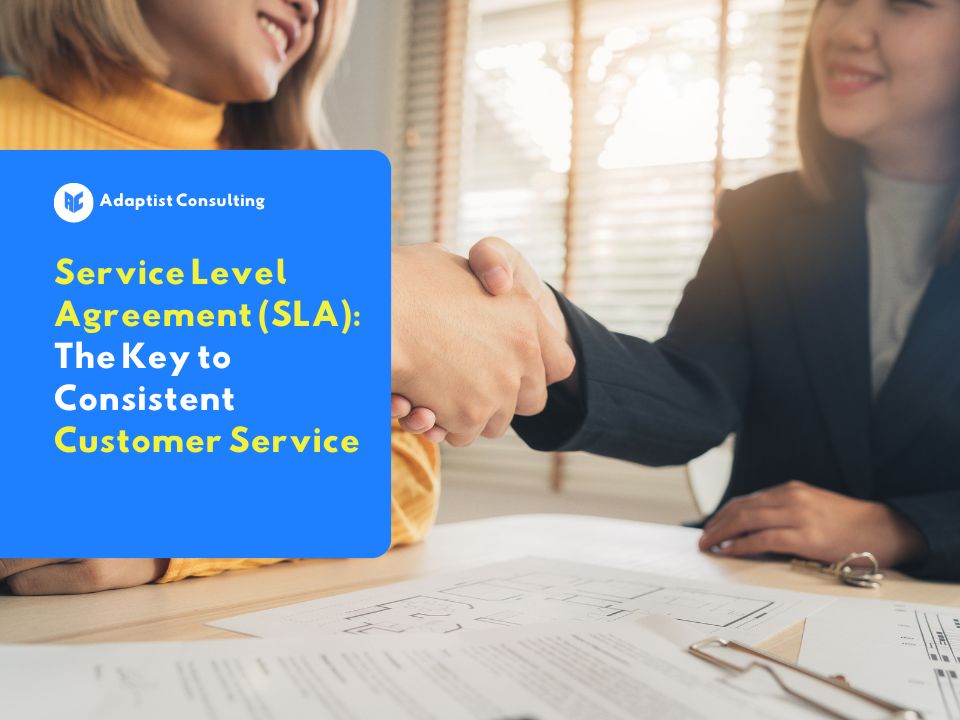
A Service Level Agreement (SLA) is one of the essential foundations for maintaining consistent service quality. SLA helps businesses align customer expectations with internal operational capabilities. In today’s increasingly competitive market, where customers are more discerning than ever, service quality plays a crucial role in business success. Customers no longer evaluate a business solely based on product quality or price, but also on how quickly and consistently the company responds to their needs. Therefore, organizations must establish clear and measurable service standards.
What Is a Service Level Agreement (SLA)?
A Service Level Agreement (SLA) is a formal agreement between a service provider and a customer that defines the level of service that must be delivered. SLA documents are typically written agreements that serve as a shared reference throughout the business relationship.
According to Amazon, an SLA defines response time requirements, resolution timeframes, service availability levels, and the actions taken when service issues occur. With an SLA in place, customers clearly understand what to expect, while companies gain measurable operational guidelines.
In customer service operations, SLA plays a critical role in ensuring that every request or issue is handled consistently, fairly, and according to its level of priority.
Types of Service Level Agreements
In practice, SLA does not come in a single form. Companies often implement multiple SLA types depending on business needs and service complexity.
Common types of SLA include:
- Customer-based SLA: A customer-based SLA is designed specifically for an individual customer or a particular customer segment. This type of SLA is commonly used for enterprise clients or customers with unique service requirements.
- Internal SLA: An internal SLA applies within the organization, typically between teams or departments. For example, a customer support team may have an SLA with the technical or IT team to resolve escalated issues. Internal SLA ensures smooth cross-team coordination and prevents internal delays from affecting customer service quality.
- Multi-level SLA:A multi-level SLA defines different service levels based on ticket priority, issue type, or customer category. This model is widely used in modern ticketing systems because it offers greater flexibility and scalability.
Choosing the right SLA type requires companies to consider business size, service variety, and customer expectations to ensure effective implementation.
Components of a Service Level Agreement
To ensure that an SLA can be implemented and evaluated effectively, it must include clearly defined core components. The main components of an SLA include:
1. Service Standards
Service standards define the performance targets that the service provider must meet. These standards typically include response time, resolution time, system availability, and agreed-upon customer satisfaction targets.
2. Penalties and Corrective Actions
This component outlines the consequences if service standards are not met. Penalties may include customer compensation, internal process improvements, or performance reviews to prevent repeated SLA violations.
3. Reporting and Evaluation
Reporting and evaluation describe how service performance is monitored and reviewed over a specific period. This component helps management and operational teams assess SLA compliance and identify areas for improvement.
4. Measurement Indicators
Measurement indicators specify the metrics used to evaluate service performance. Clear indicators ensure that SLA assessments are objective and data-driven.
5. Escalation Process
The escalation process outlines the steps teams take when they miss SLA targets or encounter delays. This mechanism ensures higher-authority personnel promptly handle unresolved issues without disrupting customer service.
SLA Metrics
SLA metrics measure whether delivered services meet the agreed standards. Without clear metrics, it becomes difficult to evaluate SLA performance objectively.
Commonly used SLA metrics include:
- First Response Time (FRT): The time required to provide the first response to a customer.
- Resolution Time: The total time taken to fully resolve a customer issue or ticket.
- Ticket Compliance Rate: The percentage of tickets resolved within SLA targets.
- Availability/Uptime: The level of service availability, especially for digital systems.
- Customer Satisfaction (CSAT): A measure of customer satisfaction after service delivery.
Benefits and Objectives of Service Level Agreements
Implementing an SLA provides strategic benefits for both companies and customers. Key benefits and objectives include:
- Service assurance: Customers clearly understand expected response and resolution times.
- Performance continuity: Companies gain defined standards and benchmarks to evaluate support team performance.
- Operational efficiency: Teams can prioritize tickets based on urgency and SLA requirements.
- Regulatory compliance: SLA supports compliance with industry standards and regulations, including Indonesia’s Personal Data Protection Law (UU PDP) 2022.
- Increased customer trust: Consistent service quality strengthens long-term customer loyalty.
Service Level Agreement Example
For example, an e-commerce company using an omnichannel ticketing system implements SLA to maintain consistent customer service quality. Support teams must respond to high-priority tickets, such as payment failures or unsuccessful order processing, within 15 minutes and resolve them within four hours. For normal-priority tickets, such as delivery status inquiries, teams are expected to resolve them within 24 business hours. When a ticket approaches its SLA deadline, the system automatically escalates it to a supervisor to prevent delays. This case illustrates how SLA helps businesses prioritize issues, improve service speed, and maintain customer satisfaction.
How to Implement a Service Level Agreement
To ensure that SLA delivers real value, companies must implement it in a structured and systematic way. Key steps include:
1. Define realistic service standards
Companies should set SLA targets based on team capacity, ticket volume, and issue complexity. Unrealistic targets can overwhelm teams, while overly lenient standards may reduce customer satisfaction.
2. Classify tickets by priority
Each customer request has a different level of urgency. By categorizing tickets into high, normal, and low priority, support teams can focus on the most critical issues first.
3. Use a ticketing system with automated SLA
SLA implementation becomes more effective when supported by a ticketing system that automatically tracks deadlines, calculates remaining SLA time, and triggers escalations. This reduces reliance on manual monitoring.
4. Train and align the support team
All support agents must understand SLA definitions, performance targets, and the impact of SLA violations. Training helps build discipline and awareness across the team.
5. Monitor and evaluate SLA performance regularly
Teams should review SLA performance using dashboards and performance reports. Based on evaluation results, companies can adjust SLA policies to remain aligned with business growth and customer expectations.
Read also: Omnichannel Strategy to Improve Customer Experience (CX)
Conclusion
A Service Level Agreement is a critical foundation for delivering consistent, measurable, and professional customer service. Through SLA, companies can align customer expectations with internal capabilities and transform service quality into a clear operational standard rather than an assumption.
When implemented effectively and supported by reliable systems, SLA not only improves customer service quality but also strengthens business reputation and long-term competitiveness. As a result, using an omnichannel ticketing system such as Adaptist Prose becomes a strategic solution for monitoring SLA compliance in real time, managing automated escalations, and generating accurate performance reports.
FAQ
Should SLA be the same across all communication channels?
Not necessarily. However, with an omnichannel system, companies can apply consistent SLA standards even when customers contact them through different channels.
How can companies effectively monitor SLA compliance?
Teams can monitor SLA compliance using a ticketing system that provides real-time dashboards, automated notifications, and periodic performance reports.
How often should SLA be reviewed?
SLA teams should review SLAs regularly, such as every six or twelve months, or whenever ticket volume or business strategy changes significantly.
Do small businesses also need SLA?
Yes. SLA helps small businesses manage service priorities early on and maintain service quality as the business grows.