









In the modern business environment, companies face increasingly complex types of risk.
Risk no longer comes from a single direction, but from multiple dimensions: operational risk arising from process errors, financial risk from market fluctuations, compliance risk related to constantly changing regulations, and technology risks such as data breaches.
In this situation, a clear and structured internal control system becomes a fundamental foundation so that companies can not only survive but also grow sustainably.
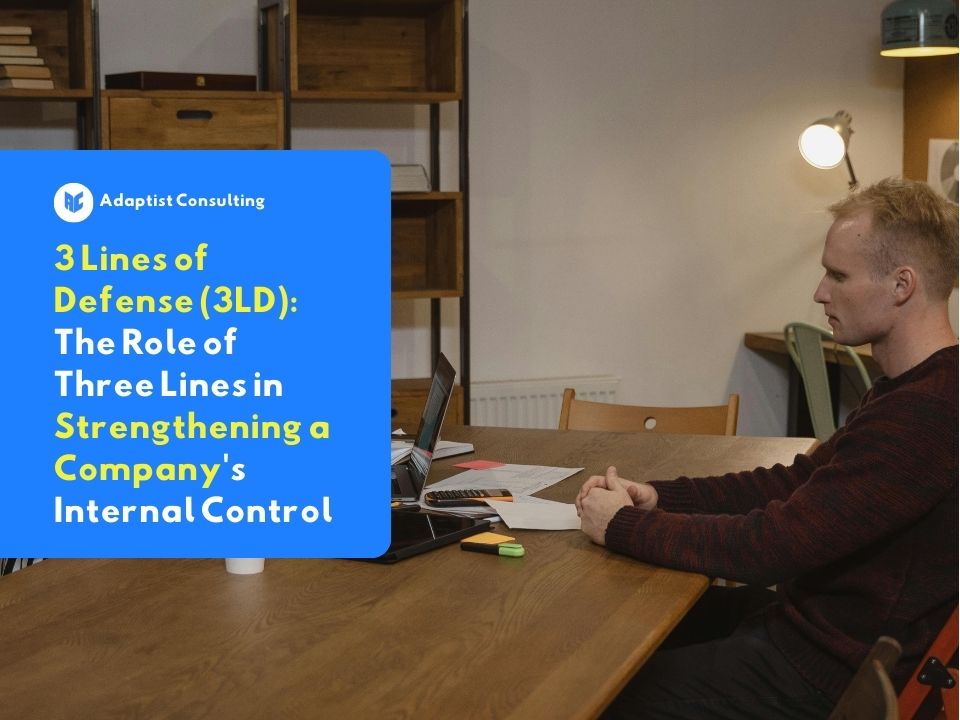
This is where the 3 Lines of Defense (3LD) model emerges as a governance framework widely adopted by organizations to ensure that risk management runs effectively, efficiently, and in an integrated manner across all layers of the company.
What is 3 Lines of Defense?
3 Lines of Defense is a risk governance model that divides the responsibility for controlling company risk into three layers of organizational functions that complement and supervise each other.
The model ensures that risk management becomes part of the overall organizational structure.
It does not place responsibility on a single function.
By dividing roles into three distinct lines, companies manage, monitor, and evaluate risks in a layered manner.
In enterprise risk management practices, this model helps clarify who is responsible for risk management at each level of the organization.
Operational units manage day-to-day risk controls. Oversight functions ensure teams implement policies correctly. And internal audit independently evaluates the effectiveness of existing controls.
Many companies adopt the Three Lines of Defense model because it reduces overlapping responsibilities in risk management.
Functions of the 3 Lines of Defense
The primary function of the 3 Lines of Defense model is to clearly divide risk management responsibilities within the organization in order to create a layered and effective control system.
In corporate governance practices, this model provides several important functions:
- Preventing role conflicts between operational functions and oversight functions
Operational units remain focused on running the business, while oversight functions ensure that activities are carried out in accordance with company policies. - Strengthening the internal control system
Each line has a different role in ensuring that risks can be identified, mitigated, and continuously monitored. - Increasing organizational accountability
With clearly defined responsibilities, each unit understands its role in managing company risks. - Ensuring independent oversight through the internal audit function
Internal audit is not involved in day-to-day operations, allowing it to provide objective evaluations of the effectiveness of the controls implemented.
In organizations with many business units, the Three Lines of Defense structure helps ensure that risk management remains consistent across the entire company.
First Line of Defense
The first line consists of operational units that run business activities while also being directly responsible for day-to-day risk management.
In many organizations, the first line is held by units that carry out the company’s main business processes. They operate at the front line of operations and therefore become the first parties to encounter potential risks.
Examples of functions typically included in the first line include:
- Operational teams
- Business units or product divisions
- IT teams that run company systems
- Customer service teams
- Operational finance teams
The main responsibility of the first line is to implement operational controls designed to mitigate risks in their activities.
For example, the sales team is responsible for verifying customer data before processing transactions. The IT team must ensure that security patches are applied on time. The operational finance team must perform daily reconciliations to detect irregularities.
The first line also plays a role in identifying risks arising from daily business activities. When a process repeatedly encounters obstacles or indications of potential loss are detected, operational units are expected to report them immediately to management.
They are also responsible for ensuring that all procedures established by management are consistently followed.
In many organizations, the effectiveness of the 3 Lines of Defense model heavily depends on the discipline of the first line in carrying out operational controls.
Second Line of Defense
The second line acts as an oversight function that ensures risk management within the first line operates in accordance with company policies.
Unlike the first line that performs operational activities, the second line has the role of establishing the risk management framework and monitoring its implementation across the organization.
In many companies, functions typically included in the second line include:
- Risk management teams responsible for identifying, measuring, and monitoring overall risk exposure
- Compliance teams ensuring all company activities comply with external regulations and internal policies
- Information security teams overseeing the security of information assets
- Data governance teams responsible for data quality and protection
The main task of the second line is to develop policies and frameworks that serve as guidance for the first line in performing their activities. Risk management sets the risk appetite and risk limits.
Compliance develops compliance guidelines based on the latest regulations. These policies are designed to create minimum standards that must be followed by all operational units.
The second line also monitors the implementation of controls carried out by the first line through various oversight mechanisms.
They conduct periodic testing of control effectiveness, analyze key risk indicators, and evaluate incident reports from operational units.
When weaknesses are found, the second line provides improvement recommendations and ensures follow-up actions are taken.
In its role as an oversight function, the second line provides guidance and support to operational units. They help the first line understand new policies, provide interpretations of complex regulations, and support the implementation of effective controls.
This position makes the second line act as a facilitator bridging strategic policies with operational execution.
Third Line of Defense
The third line is an independent audit function that assesses the effectiveness of risk management and internal controls across the organization.
Internal audit occupies a unique position within the governance structure due to its independence from operational management.
Internal auditors are not involved in policy development like the second line, nor do they perform business operations like the first line.
They report functionally to the board of directors or the audit committee, enabling them to provide objective assessments without pressure from the parties being audited.
The evaluation function performed by the third line includes assessing the adequacy of control design and its operational effectiveness.
Internal audit tests whether policies developed by the second line are adequate to address the risks faced. They also examine whether the first line actually implements controls according to established procedures.
Audit findings are then reported to management and the board of directors along with improvement recommendations.
The third line provides assurance to senior management and the board of directors that the risk management system is functioning as intended.
Independent audit reports become the basis for the board to assess whether company risks are managed within acceptable limits.
Without this function, top management would rely solely on reports from the first and second lines, which may have conflicts of interest.
Some activities commonly carried out by internal audit include:
- evaluating the effectiveness of internal controls
- assessing the implementation of risk management policies
- identifying weaknesses in control processes
- providing improvement recommendations to management
In practice, the effectiveness of the third line heavily depends on the competence of auditors and support from the highest levels of the organization.
Internal audit must have a deep understanding of the business and the risks faced, not merely perform procedural compliance checks. They must also have unrestricted access to information and personnel necessary to carry out their duties.
Steps for Implementing the 3 Lines of Defense
The implementation of the 3 Lines of Defense within an organization usually begins by clearly defining the roles and responsibilities of each function in risk management.
Several common implementation steps include:
Defining roles and responsibilities
Organizations need to clearly document the responsibilities of each line in managing risk. This is typically outlined in company risk management policies or the internal control framework.
Developing risk management policies
Companies need to establish policies and standards that serve as guidelines for all business units in identifying, assessing, and managing risks. These policies must include risk appetite, risk tolerance, and reporting procedures for each type of material risk.
Organizations also need to establish coordination mechanisms between lines, including reporting formats and frequency, as well as escalation protocols when risks exceed defined limits.
Building the risk management function
Many organizations begin by appointing a risk officer or forming a dedicated risk management unit. This unit coordinates the implementation of the 3LD model across the organization.
As part of the second line, it develops risk frameworks and provides guidance. It also ensures each unit understands its role in the risk management structure.
Strengthening the internal audit function
Organizations need to ensure that internal audit has adequate resources, relevant competencies, and sufficient access to all business areas.
Internal audit provides objective and independent assessments. It evaluates first-line activities and reviews the effectiveness of second-line functions.
Using a GRC system
The use of a GRC (Governance, Risk, and Compliance) system greatly supports the implementation of the 3LD model.
This technology platform enables more effective coordination between lines through centralized risk data, automated reporting, and better visibility for management.
With a GRC system, the first line can track the execution of their controls, the second line can monitor compliance in real-time, and the third line can access audit data more efficiently.
Conclusion
3 Lines of Defense is a governance model that helps companies clearly divide risk management responsibilities across the organization.
Through the separation of roles between operations, risk oversight, and internal audit, companies build stronger internal controls.
In enterprise risk management, the Three Lines of Defense model improves accountability and strengthens oversight. It also helps ensure risk policies are implemented in daily operations.
Amid growing business and regulatory complexity, this approach becomes a key foundation of Governance, Risk, and Compliance (GRC).
With a clear structure between the three lines, companies can manage risks systematically without hindering business operations.
FAQ: 3 Lines of Defense
3 Lines of Defense is a governance model that divides company risk management responsibilities into three lines: operational units, risk oversight functions, and internal audit.
This model helps organizations clarify responsibilities in risk management, strengthen internal controls, and ensure independent oversight of business operations.
Not all companies are required to implement it formally, but many organizations use this model because it helps build clearer risk management and internal control structures.
The first line usually consists of operational units such as business teams, operations, IT, and customer service that run company activities while managing risks in their daily work processes.
The second line functions as an oversight body that develops risk management policies, monitors the implementation of controls, and provides guidance to operational units regarding risk management and compliance.
The third line is carried out by internal audit, which evaluates the effectiveness of internal controls and provides independent assurance to management and the board of directors.