












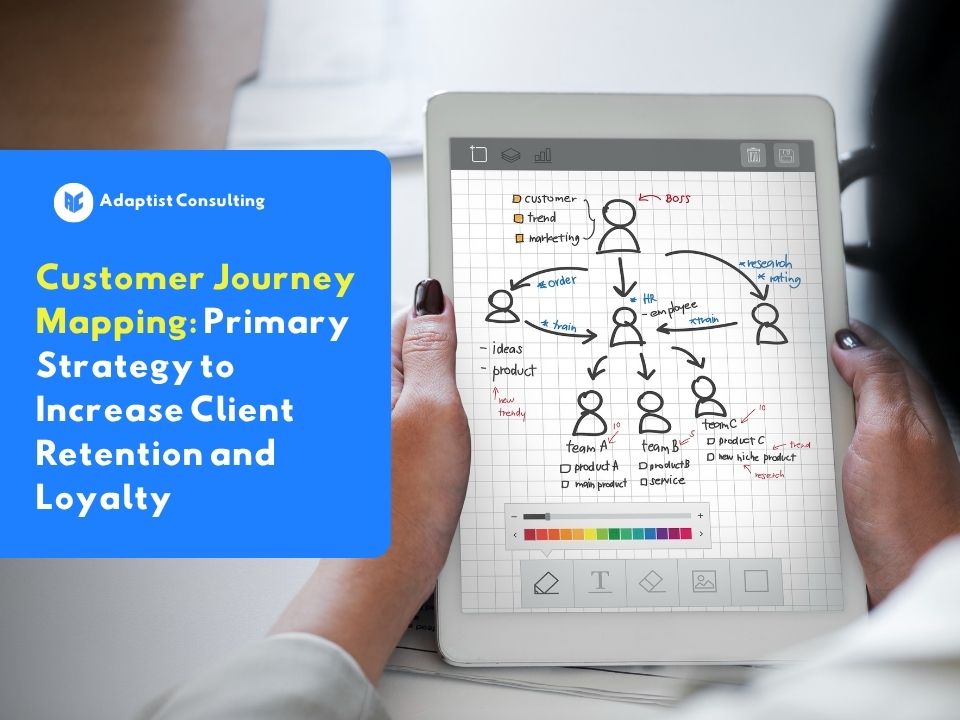
Customer journey mapping constitutes a highly critical analytical instrument for enterprise organizations operating within the highly competitive modern business landscape today. This comprehensive analytical strategy helps organizations dissect every single stage of customer interaction with absolute data-driven precision.
Customers now demand highly seamless and personalized digital experiences across every single interaction point they encounter. The modern business landscape urgently requires companies to proactively eliminate operational hurdles while simultaneously strengthening their underlying network defenses.
Definition of Customer Journey Mapping
Customer Journey Mapping is fundamentally an important part of the overall customer journey that serves as a detailed visual representation regarding the entire holistic customer experience with a specific corporate brand. This visualization records the complete chronology of events starting from the initial brand awareness stage up to the post-purchase loyalty phase.
This mapping concept practically records general interaction flows such as the smoothness of the new account registration process by clients. Such authentic field documentation subsequently guides the development team in formulating a much more intuitive and responsive service system interface.
This advanced approach also deliberately incorporates the psychological and emotional elements of clients throughout every stage of their business decision-making. That precise sentiment analysis becomes absolutely crucial to prevent the sudden and unexpected cancellation of ongoing service contracts.
Benefits of Customer Journey Mapping
Implementing this mapping strategy provides various strategic advantages for corporate operational efficiency. The following points outline several primary benefits obtained through accurate customer journey visualizations.
- Comprehensive view regarding how customers interact with corporate services across various communication channels.
- Marketing strategy alignment to ensure corporate campaigns resonate perfectly with actual target audience needs in the field.
- Efficiency enhancement regarding operational resource allocation at the most impactful interaction touchpoints.
- Sales conversion optimization alongside measurable reductions in overall customer acquisition costs.
Why Customer Journey Mapping is Important
This strategy is highly essential for management teams to make valid data-driven operational decisions. Such interaction data successfully eliminates internal corporate assumptions that often miss actual market expectations entirely.
For interface design teams this visualization serves as the primary guide to create highly functional features. Meanwhile for customer service teams this mapping proactively helps them anticipate technical complaints before the problems escalate further.
Crucial Variables in Customer Journey Mapping
Collective understanding of the components in the table below will accelerate the identification process of operational gaps and communication vulnerabilities prone to identity theft threats or customer data leaks.
| Interaction Phase | Customer Touchpoints | Emotions and Expectations | Interaction Hurdles |
|---|---|---|---|
| Brand Awareness | Digital advertising networks and social media publications | High curiosity regarding the comprehensive solutions being offered | Marketing messages lack relevance to specific target business problems |
| Purchase Consideration | Official corporate websites and comprehensive case study reviews | Expectation to receive highly detailed and transparent technical information | Profile page navigation feels highly confusing for enterprise users |
| Final Decision | Transaction pages and direct interactions with sales representatives | Desire for fast and secure execution processes with protection layers from precise data decryption technology | Payment billing methods possess very limited available corporate options |
| Client Retention | Technical support services and periodic software update newsletters | Need for highly responsive and solution-oriented technical support assistance | Operational complaint handling processes run at very slow speeds |
Strategic Steps to Formulate an Effective Customer Journey Map
The successful implementation of this mapping strategy requires a highly structured and objectively measurable operational framework. A systematic approach guarantees the resulting visualization outputs truly represent the actual field conditions occurring across the organization.
An arbitrary formulation process actually has the massive potential to mislead the long-term strategic policy direction of the company. Therefore top management needs to strictly adhere to the following analytical stages to actively minimize the risk of fatal strategic errors.
1. Analytical Research and Persona Determination
This fundamental stage requires companies to meticulously collect quantitative as well as qualitative data from historical client interaction records. Such concrete data is then mathematically formulated to build artificial personas accurately representing the primary business target segments.
Making executive decisions based solely on internal corporate assumptions is highly risky for generating fundamentally biased journey maps. Market research teams must actively utilize advanced analytical tools to scientifically validate specific characteristics embedded within each persona.
As a concrete example companies can deeply analyze bounce rates on their official websites to accurately measure initial interest levels. Such specific analytical metrics provide a strong factual foundation before formulating any further audience outreach marketing strategies.
2. Multichannel Touchpoint Identification
Companies critically need to conduct a thorough inventory of every communication medium bridging the brand interactions with their target audience. These strategic mediums encompass interactive digital platforms up to conventional communication channels that still remain relevant today.
A comprehensive understanding of these various scattered touchpoints constitutes a preventive step to aggressively avoid disconnected client experiences. The consistency of communication message delivery across all channels assisted by the implementation of Sales Force Automation (SFA) becomes a crucial factor forming customer trust levels.
An application example of this step is tracking the exact response duration of the customer service team through the live chat feature. Assessing that specific time duration is highly useful for systematically ensuring service standards remain completely consistent across various communication devices.
3. Remapping and Data Silo Resolution
The absolute biggest hurdle in realizing a seamless customer experience mostly originates from departmental operations running in total isolation. Proactive cross-divisional collaboration becomes a strict absolute requirement to successfully achieve a complete level of operational data integration.
The synchronization of interdepartmental information flows will directly produce a single customer profile that is truly comprehensive. A data centralization strategy managed through integrated security management and information systems effectively eliminates crucial information gaps frequently triggering repeated customer complaints.
A real implementation example of silo resolution is database integration between the main marketing department and the after-sales division. This systematic technological integration ensures technical complaints from existing clients are never handled like basic inquiries from brand new prospects.
Conclusion
Optimizing the customer journey map will ultimately create a highly synchronous and systematic corporate communication flow across all divisions. This daily business process synchronization firmly guarantees the creation of a seamless interaction experience for all existing clients.
Technology companies capable of perfectly managing all these distinct interaction points are guaranteed to have measurable competitive market advantages. Incredible increases in both long-term client retention and loyalty will form naturally as a direct result of such excellent service delivery.
To be capable of managing such a complex data flow infrastructure companies certainly urgently need advanced automation software systems. Utilizing the right technology architecture will permanently free operational teams from highly exhausting manual data recapitulation work routines.
Adaptist Prose officially arrives as a smart business process automation solution specifically designed to manage that exact level of operational complexity. This superior software product is highly ready to simplify administrative workflows and integrate scattered customer data accurately.
Optimize Your Customer Service
Schedule a demo of Adaptist Prose and see how an integrated ticketing system helps bring tickets, conversations, and customer data together in a single dashboard. With a more structured workflow, teams can respond faster, reduce operational burden, and maintain consistent service quality as the business grows.
The implementation of advanced automation infrastructure firmly ensures every operational stage of the company runs with high precision and strict measurability. Business organizations can then fully focus purely on continuous service innovation without being burdened anymore by structural technical complexities.
FAQ
The main purpose is to comprehensively understand the operational customer experience strictly from the direct end-user perspective. This strategic understanding significantly helps company management fix service structure weaknesses to successfully increase overall client satisfaction.
This analytical map should ideally be reviewed at least once a year or whenever there is a major new product launch agenda. Periodic matrix updates ensure the operational tactics of the company persistently remain aligned with the rapid dynamics of modern consumer behavior changes.
Creating a highly effective interaction map requires active representatives from all departments directly interacting with end customers. Digital marketing teams up to operational technical support divisions must collaborate very closely to properly present authentic field data.
Customer journey mapping measures the entire complete chronology of client interactions with a trademark from the beginning awareness to the loyalty phase. User experience specifically focuses much more on assessing someone’s direct technical interaction towards a single application product or website interface.
Initial concept initiation steps can be done sufficiently using basic visual diagram software to correctly draft the foundational basic ideas. Along with the massive increase in corporate historical data volumes it is highly recommended to immediately switch to using specialized business analytics platforms.