









Segregation of Duties (SoD): Definition, Objectives, and Examples
January 9, 2026
Chatbot: Definition, Functions, and Its Role in Business
January 12, 2026What is Patching? The Ultimate Guide to System Security, Types, and Objectives
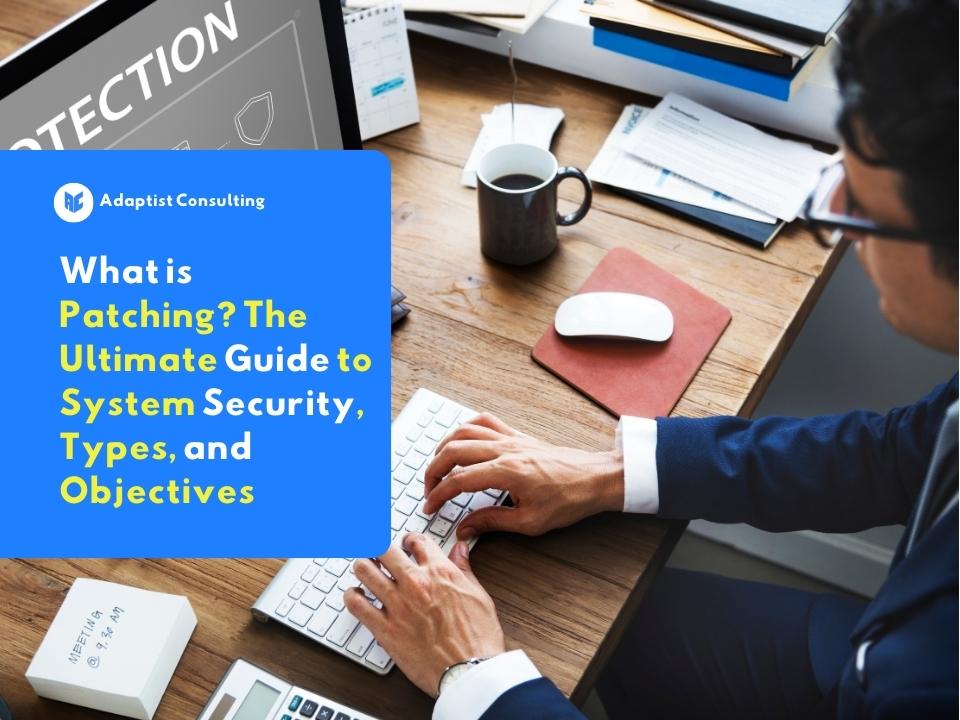
IT infrastructure security is no longer merely an option but has become the foundation of business continuity. One of the most fundamental, yet frequently overlooked, pillars of cyber defense is patch management.
Failure to perform timely patching can open the door to massive cyberattacks that paralyze company operations. The impact of this seemingly simple negligence can be far-reaching, ranging from data theft to legal and regulatory risks.
What does patching mean in technology?
Patching is the process of applying code updates to installed software, operating systems, or applications. This action is taken to fix security vulnerabilities, bugs, or improve functionality without having to replace the entire system.
System administrators usually receive these update packages from software vendors (such as Microsoft, Linux, or third-party application providers). Once validated, the patch is distributed to all corporate endpoints or servers to close identified vulnerabilities.
Imagine your company’s IT system is a magnificent office building with thousands of windows and doors. Over time, extreme weather or material wear causes small cracks in window glass or holes in the roof.
Patching is akin to sealing those cracks or replacing broken glass as soon as damage is found. You don’t need to demolish the building and rebuild it from scratch just because of a leaky roof.
If you leave the hole unattended (fail to patch), rainwater (malware) will enter and cause damage. In a cybersecurity context, this patching prevents hackers from infiltrating through small gaps that could actually be fixed easily.
Why Is Patching Crucial for System Security?
1. Closing Security Vulnerabilities
The primary reason for patching is to mitigate the risk of exploitation of software vulnerabilities. Hackers constantly scan corporate networks for obsolete code or logical flaws they can leverage.
By applying security patches, you effectively close the entry points commonly used by attackers to inject malicious code. This is the first preventive step in vulnerability assessment to reduce your organization’s attack surface.
2. Maintaining System Stability (Uptime)
Beyond security, patching plays a vital role in maintaining application and operating system performance stability. Unupdated software often experiences performance degradation, sudden crashes, or incompatibility with new hardware.
For enterprise-scale companies, downtime caused by system failure can damage reputation and finances significantly. Routine patching ensures systems run smoothly, supporting employee productivity without unnecessary technical interruptions.
3. Regulatory Compliance
In the era of the UU PDP (Personal Data Protection Law No. 27 of 2022), ignoring security updates can be categorized as negligence in protecting personal data. Compliance with data controller obligations to implement adequate technical security measures is a critical step.
If a data leak occurs due to an unpatched system, your company risks administrative sanctions and heavy fines. Therefore, patch management must be an integral part of your company’s compliance management strategy.
4. Preventing Malware Attacks (Data Security)
Modern malware in today’s digital era, such as ransomware, is often designed to spread automatically through unpatched security gaps. Without the latest patches, antivirus software or firewalls might not be enough to stop attacks exploiting kernel-level or OS vulnerabilities.
Applying patches breaks the malware infection chain, preventing it from spreading from one computer to the entire corporate network. This protects intellectual property assets and customer information from illegal encryption or theft.
Types of Patching in IT
In the IT industry, patching types are categorized based on their objectives as follows:
1. Security Patches
This is the most critical patch type and must be prioritized above all else. Security patches are released specifically to fix known vulnerabilities that can be exploited by external parties. Delay in applying this patch type places the organization at high risk of direct hacking. Vendors usually release these as soon as a vulnerability is found (often called a Zero-Day patch if an attack has already occurred).
2. Bug Fixes
Not all updates relate to security; some aim to fix logical errors in program code. Bug fixes address issues like malfunctioning features, interface display errors, or annoying error messages. Although not always urgent security-wise, ignoring bug fixes can hinder team operational efficiency. Accumulated unaddressed bugs will degrade user experience.
3. Feature Updates
Software vendors periodically release updates to add new functionalities or improve existing features. This type of patching is important to ensure your company remains competitive by using the latest technology. However, feature updates usually require larger file sizes and longer installation times compared to security patches. Careful deployment planning is needed to avoid disrupting operational work hours.
4. Hotfix
A hotfix is an update released in emergencies to fix specific issues on a running system (live environment). Unlike regular updates, hotfixes are applied as soon as possible without waiting for routine maintenance schedules. Typically, this is done when critical incidents threaten service continuity or data security immediately. This process is closely related to responsive incident management procedures.
Difference Between Patching and Updating
Many non-technical professionals often use the terms patching and updating interchangeably, although they actually have distinct nuances. Understanding this difference helps management allocate IT resources more effectively.
Updating generally refers to major changes, modernizing software to a newer version (e.g., from Windows 10 to Windows 11). Whereas patching is more of a partial repair on the same version.
Here is a comparison table to clarify the differences:
| Differentiating Aspect | Patching | Update |
|---|---|---|
| Primary Definition | Small code pieces to fix specific issues in existing software. | Broader new version release combining fixes, features, and modernization. |
| Crucial Goal | Security Repair. Focuses on bugs, vulnerabilities, or code errors. | Feature Enhancement. Focuses on adding features, changing UI, or performance optimization. |
| Nature of Change | Corrective. Fixes broken, error-prone, or dangerous components. | Evolutionary. Develops software to a more modern stage. |
| File Size | Small. Often just in KB or MB units. | Large. Can reach hundreds of MB or GB (often partial reinstallation). |
| Version Impact | Changes minor/last digit (e.g., v1.0.1 to v1.0.2). | Changes major/middle digit (e.g., v1.0 to v2.0 or v1.1). |
| Urgency | Very High (Critical). Must be installed immediately to prevent hacking or system failure. | Medium. Can be scheduled until users or infrastructure are ready for change |
| Content | Bug fix code, security hotfixes, and driver repairs. | New features, redesigns, compatibility improvements, and collections of previous patches. |
| Risk of Absence | The system is vulnerable to malware, data hacking, and application instability. | Loss of access to competitive features and the system slowly becomes obsolete. |
Case Study: Fatal Impact of Not Patching
One of the most vivid examples of the danger of ignoring patching is the global WannaCry attack in May 2017. This attack combined ransomware characteristics with a network worm, allowing it to spread automatically without user interaction.
This malware paralyzed Microsoft Windows operating systems by encrypting user data and demanding a ransom in Bitcoin. WannaCry exploited a security vulnerability known as “EternalBlue,” an exploit tool leaked from the NSA.
The main cause of this massive scale of damage was organizational negligence in applying the MS17-010 security patch. In fact, Microsoft had released a patch for that vulnerability two months before the attack occurred.
Many institutions, including the NHS healthcare service in the UK, were totally paralyzed because they were still using expired operating systems like Windows XP or delaying patching. Consequently, emergency patients had to be turned away because medical systems were locked, and global economic losses were estimated to reach US$4 billion.
The WannaCry case teaches that cybersecurity is not just the IT team’s responsibility, but also corporate risk management. Reliance on manual processes often makes organizations too late in closing critical security gaps.
Automation in IT security, including access management and vulnerability monitoring, becomes key to preventing similar incidents. Using solutions like IT security automation can help companies detect risks earlier, before they are exploited.
Conclusion
Patching is the first and most effective line of defense in maintaining the integrity of corporate digital infrastructure. Ignoring it is akin to leaving your business gates wide open for cybercriminals.
However, patch management is just one part of a larger security ecosystem. For comprehensive protection, companies require strict access control and solid identity management like Adaptist Prime. This solution ensures that even if system gaps exist, threat actor movement can be significantly limited through precise access control.
With the support of Adaptist Prime, your company can build a digital ecosystem that is secure, time-efficient, and ready to grow without sacrificing data protection or user convenience.