











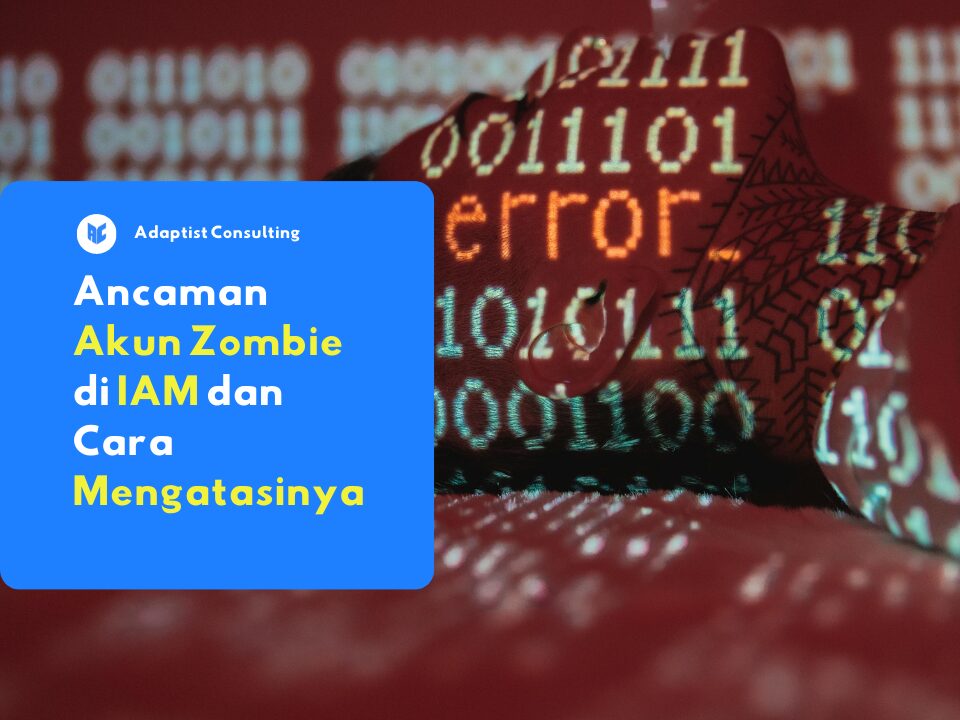
Zombie accounts in IAM are one of the security risks that are often overlooked in Identity and Access Management (IAM) systems. These accounts usually originate from users who are no longer active but still retain access to organizational systems. If not properly managed, zombie accounts in IAM can be exploited by attackers to enter organizational systems without being detected.
What Are Zombie Accounts in IAM
Zombie accounts are user accounts that remain active in an IAM system even though they are no longer used. This situation often occurs due to poor user account lifecycle management.
Some examples of zombie accounts include:
- Employee accounts that remain active even after the employee has resigned
- Temporary accounts created for specific projects that were never deactivated
- Legacy system accounts that still have access to infrastructure
These accounts are often not closely monitored, making them a potential entry point for cyberattacks.
Why Zombie Accounts in IAM Are a Security Threat
Zombie accounts in IAM can pose a serious security threat to organizations. This happens because these accounts still have access to systems even though they are no longer used by their original owners. In many cases, inactive accounts are not strictly monitored by security teams.
This situation creates opportunities for malicious actors to exploit these unused accounts. If attackers manage to discover zombie accounts in IAM, they can use them as an entry point into organizational systems. They can gain access without having to create new accounts or bypass complex authentication processes.
In addition, the presence of zombie accounts can make system activity monitoring more difficult. Because these accounts have existed in the system for a long time, activities performed through them may appear normal. As a result, suspicious behavior may not immediately trigger security alerts.
Unauthorized Access to Systems
One of the main risks of zombie accounts in IAM is the potential for unauthorized access to organizational systems. Attackers can exploit unused accounts to log into systems without having to create new accounts or steal credentials from active users. By using zombie accounts, attacker activities may appear as legitimate user actions.
Difficult to Detect by Security Systems
Zombie accounts are often difficult for security systems to detect. Because these accounts have existed for a long time, activities carried out through them may not immediately be considered suspicious. This allows attackers to perform malicious actions for a longer period before being detected.
Potential Abuse of Privileges
If zombie accounts have high-level access privileges, the security risk becomes even greater. Attackers who successfully gain access to such accounts may be able to view sensitive data, modify system configurations, or misuse organizational resources for malicious purposes.
Causes of Zombie Accounts in IAM
Zombie accounts in IAM usually appear due to weak identity governance within an organization. When Identity and Access Management systems are not properly managed, accounts that should no longer be active often remain enabled in the system. This can happen due to insufficient monitoring of the user account lifecycle, from account creation and usage to deactivation.
In many organizations, account management involves multiple systems and applications. Without an integrated management process, IT teams may struggle to monitor whether an account is still actively used or not. As a result, accounts that should have been disabled may continue to retain access to important systems.
In addition, poor coordination between HR and IT teams can also lead to the creation of zombie accounts. When employees leave the company or change roles, these changes are not always immediately reflected in the IAM system. This situation allows old accounts to remain active and potentially become security vulnerabilities.
Ineffective Offboarding Processes
One of the primary causes of zombie accounts in IAM is an ineffective offboarding process. When an employee leaves a company, all of their system access should be immediately disabled or removed. However, in practice, this process is often delayed.
If the offboarding process does not follow clear procedures, user accounts may remain active for days or even months after the employee has left the organization. This significantly increases security risks because those accounts can still be used to access internal systems.
Lack of Regular Access Audits
Access audits are an important step in ensuring that all accounts within a system remain relevant and authorized. However, not all organizations perform access audits regularly.
Without routine audits, organizations may find it difficult to identify accounts that are no longer used but still remain active in the system. These accounts eventually become zombie accounts in IAM. Therefore, regular access audits are essential to detect inactive accounts and disable them before they become a security risk.
Decentralized Access Management
Many organizations rely on multiple systems and applications to support their operations. When each system manages access independently, user account management becomes more complicated.
If access is not centrally managed through an integrated IAM system, the likelihood of zombie accounts increases. An account that has been removed from one system might still remain active in another. This lack of centralized control makes it difficult for organizations to maintain consistent identity management.
Impact of Zombie Accounts in IAM on Organizations
The presence of zombie accounts in IAM can have serious consequences for both security and organizational operations. Although these accounts may appear harmless because they are not actively used, they still maintain access to systems that may contain sensitive data.
If malicious actors exploit zombie accounts, organizations may face significant security incidents. Attackers can use these accounts as entry points to internal networks without immediately raising suspicion.
In addition, zombie accounts increase the attack surface of an organization’s systems. The more active accounts exist in a system, the greater the possibility that attackers may exploit vulnerabilities. For this reason, organizations must understand the potential impact of zombie accounts and take proactive measures to address them.
Some possible impacts include:
- Exposure of sensitive data that can harm both the organization and its customers
- Unauthorized system usage by malicious actors
- Risk of violating information security regulations or data protection standards
- Damage to the organization’s reputation due to security incidents
Therefore, organizations need clear strategies to manage and control inactive accounts to prevent greater security risks in the future.
How to Prevent Zombie Accounts in IAM
Preventing zombie accounts in IAM is an essential step in maintaining the security of organizational systems. With proper identity management practices, organizations can ensure that only authorized users are able to access critical systems.
One of the key steps is strengthening the management of the user account lifecycle. Each account should have a clearly defined status from creation to eventual deactivation. This ensures that accounts are not forgotten or left active unnecessarily within the system.
Organizations should also implement strong security policies for managing user access. These policies should cover account creation procedures, access permissions, and proper deactivation processes when users no longer require access.
By implementing effective preventive strategies, organizations can significantly reduce the risk of zombie accounts and strengthen their overall cybersecurity posture.
Implement Lifecycle Management
Lifecycle management ensures that every user account follows a clear lifecycle process. This includes account creation, permission updates, and account removal when access is no longer needed.
With proper lifecycle management, organizations can ensure that no account remains active without a legitimate purpose.
Conduct Regular Access Audits
Regular access audits help organizations review all accounts within the system. Through these audits, security teams can identify inactive accounts and disable them before they become a security risk.
Use IAM Automation
Automation technologies within IAM systems can help detect accounts that have been inactive for a certain period. The system can automatically disable accounts or notify administrators when suspicious inactivity is detected.
Apply the Principle of Least Privilege
The principle of least privilege ensures that users are granted only the minimum level of access necessary to perform their tasks. Even if an account becomes inactive, the potential for privilege misuse is minimized.
How to Address Existing Zombie Accounts in IAM
If an organization already has many zombie accounts within its IAM system, the first step is to identify those accounts. This process is typically carried out through system audits to detect accounts that have been inactive for extended periods.
Once zombie accounts are identified, organizations should take appropriate action to reduce security risks. This may involve temporarily disabling accounts or permanently deleting them from the system.
In addition, organizations should improve their identity management processes to prevent similar issues from occurring in the future. By implementing better account governance policies, organizations can ensure that every account within the system serves a legitimate purpose.
Some steps that can be taken include:
- Identifying accounts that have been inactive for a specific period
- Disabling accounts that are no longer used
- Permanently removing outdated accounts from the IAM system
- Documenting account management processes to maintain consistency
These steps can help organizations reduce potential security risks while improving control over system access.
Conclusion
Zombie accounts are a security risk that is often overlooked in Identity and Access Management (IAM). Accounts that are no longer used but remain active can be exploited by attackers to gain unauthorized access to organizational systems.
By implementing proper IAM governance, conducting regular access audits, and using automation for account management, organizations can minimize the risks posed by zombie accounts and maintain stronger overall system security.
FAQ
Zombie accounts in IAM are user accounts that remain active in a system even though they are no longer used or the owner no longer has legitimate access. These accounts can create security risks if not properly managed.
Zombie accounts can be exploited by attackers to gain unauthorized access to systems. Because these accounts already exist in the system, suspicious activities may be harder to detect.
Zombie accounts often appear due to poor account lifecycle management, such as when employees leave the company but their accounts are not disabled, or when temporary project accounts are not removed.
Organizations can prevent zombie accounts by implementing proper IAM lifecycle management, conducting regular access audits, using automated account monitoring, and applying the principle of least privilege.