










Cyberattacks no longer exclusively target large tech corporations, every organization operating on digital systems is now a potential victim.
What makes it even more critical is that many security incidents are only identified after the damage has already been done, rather than at the stage when prevention was still possible.
What Is a Security Operations Center (SOC)?
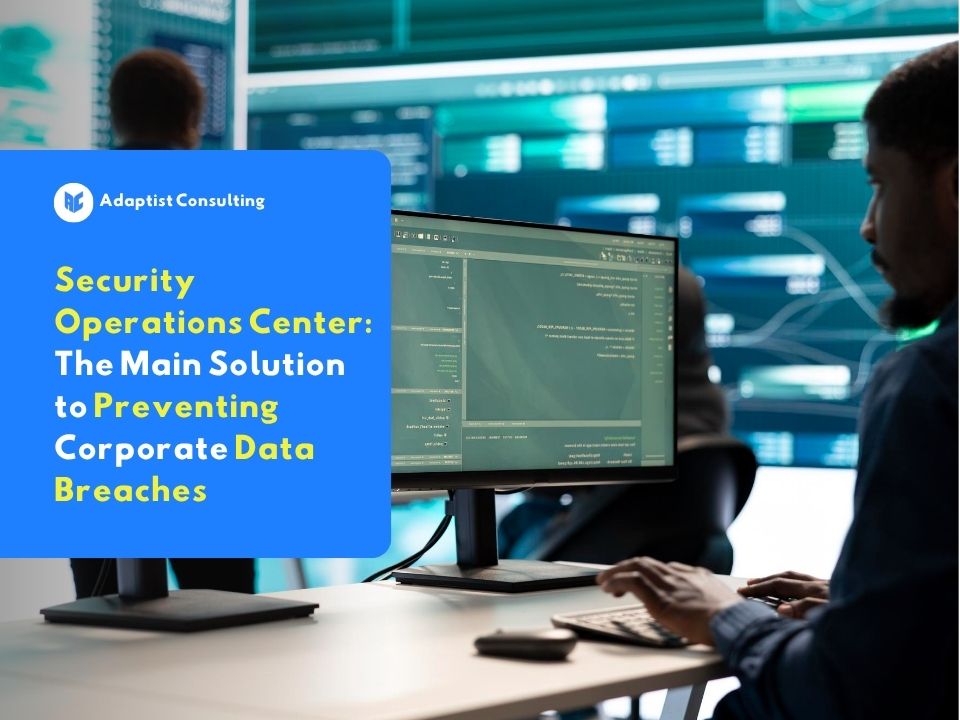
A Security Operations Center, or SOC, is a centralized unit within an organization responsible for continuously monitoring, detecting, analyzing, and responding to cyber threats.
Operating 24 hours a day, 7 days a week, a SOC combines advanced technology with a team of trained security analysts to protect the integrity of an organization’s entire information infrastructure.
Unlike reactive security approaches that only mobilize after an incident occurs, a SOC is built to be proactive.
Its core purpose is to shorten the gap between the moment an attack begins and the moment a response is executed, a critical indicator that directly determines the scale of damage a company must absorb.
Core Functions of a SOC in the Corporate Security Ecosystem
A SOC is far more than just “an IT team working the night shift” as its role is fundamentally strategic. Every function within a SOC is interconnected, forming a comprehensive and coordinated layer of defense.
Real-Time Threat Monitoring
A SOC monitors all network traffic, system logs, and user activity in real-time using platforms such as SIEM (Security Information and Event Management).
Every detected anomaly is immediately analyzed to determine whether it represents a genuine threat or a false positive.
This monitoring capability forms the foundation of every other SOC function. Without complete visibility into what is happening across a company’s digital environment, fast and targeted responses simply cannot exist.
Security Incident Detection & Analysis
Once an anomaly is identified, the SOC team conducts an in-depth analysis to understand the nature and scope of the threat. Common types of incidents handled by a SOC include:
- Suspicious malware and ransomware activity.
- Unauthorized access attempts to systems or sensitive data.
- Phishing attacks targeting employees.
- Silent data exfiltration occurring outside of business hours.
- Insider threat activity from internal users abusing their access privileges.
Incident Response & Recovery
Once an incident is confirmed, the SOC executes a pre-designed response procedure to minimize impact. The standard stages carried out are:
- Containment: Isolating infected systems to prevent the threat from spreading laterally to other assets
- Eradication: Removing malware or attack vectors from every affected part of the environment
- Recovery: Restoring systems to normal operational status from clean, verified backups
- Post-Incident Review: Documenting the incident timeline and closing the gaps that were successfully exploited
Regulatory Compliance & Security Reporting
A SOC also ensures that the organization’s security activities remain aligned with applicable regulations. Key standards and frameworks relevant to organizations operating in Indonesia include:
- Personal Data Protection Law (UU PDP).
- ISO/IEC 27001 for information security management systems.
- NIST Cybersecurity Framework as a globally recognized reference.
- OJK regulations for the financial and banking sector.
Core Components That Build an Effective SOC
An effective SOC is not built on technology alone, as three foundational pillars must operate in sync. These components are commonly summarized as People, Process, and Technology.
| Component | Key Elements | Role in the SOC |
|---|---|---|
| People | SOC Analysts, Incident Responders, Threat Hunters | Data interpretation and response decision-making |
| Process | Playbooks, SOPs, escalation frameworks | Consistency and speed in incident handling |
| Technology | SIEM, SOAR, EDR, Threat Intelligence | Automated detection and large-scale data correlation |
Human Resources (The SOC Team)
A SOC team is typically structured across multiple tiers, each carrying a distinct depth of responsibility. The standard tier-based structure generally looks like this:
- Tier 1 SOC Analyst: Monitors incoming alerts and performs initial triage.
- Tier 2 Incident Responder: Investigates incidents escalated from Tier 1.
- Tier 3 Threat Hunter: Proactively searches for hidden threats not yet flagged by automated systems.
- SOC Manager: Oversees overall operations and ensures SLAs are consistently met.
Technology & Tools in Use
The effectiveness of a SOC is heavily dependent on the technology ecosystem the team works with on a daily basis. Key tool categories typically present in a modern SOC include:
- SIEM: aggregation, correlation, and analysis of logs across all digital assets.
- SOAR: automation of incident response workflows to accelerate handling.
- EDR: granular threat detection and response at the endpoint level.
- Threat Intelligence Platform: real-time threat context sourced from external feeds and the security community.
- Vulnerability Management Tools: continuous scanning and prioritization of security gaps.
Operational Processes & Frameworks
Even the best technology will fail without structured processes behind it. A mature SOC operates based on playbooks and runbooks that precisely define what actions must be taken for every threat scenario.
Frameworks such as MITRE ATT&CK serve as references for understanding attacker tactics and techniques, allowing teams to build more precise detections that stay relevant against an ever-evolving threat landscape.
How a SOC Works: The Threat Response Lifecycle
A SOC operates in a structured, repeating cycle, designed to ensure no gap goes unmonitored. The following is the standard workflow executed when a SOC detects and responds to a threat:
- Monitoring: SIEM collects and correlates data from all digital assets in real-time.
- Alert Triage: Tier 1 analysts evaluate incoming alerts and determine what requires escalation.
- Investigation: The team investigates deeper to understand the full scope and potential impact of the incident.
- Containment: Compromised systems are isolated to prevent lateral movement to other assets.
- Eradication & Recovery: The threat is fully eliminated and systems are restored to normal operational status.
- Lessons Learned: The incident is documented and playbooks are updated to strengthen readiness against similar future threats.
Types of SOC Models: Which One Is Right for Your Business?
There is no single SOC model that fits every organization, as the right choice depends on business scale, available budget, and the level of risk exposure involved. Here is a comparison of the three most widely adopted SOC models today:
| Model | Strengths | Weaknesses | Best For |
|---|---|---|---|
| In-House SOC | Full control, high customization | High cost, difficult talent acquisition | Large enterprises |
| Managed SOC | Cost-efficient, operational from day one | Vendor dependency | SMEs & mid-market |
| Hybrid SOC | Flexible and scalable | More complex coordination | Growing organizations |
In-House SOC
An In-House SOC is built and operated entirely by internal company personnel, providing complete ownership over every aspect of security operations.
This model suits large organizations handling highly sensitive data that have the resources to build infrastructure and recruit cybersecurity talent independently.
Managed SOC (SOC as a Service)
A Managed SOC allows companies to outsource their security operations to a specialist service provider that already has the infrastructure and team in place.
This model is increasingly popular because it delivers enterprise-grade SOC capabilities at a significantly lower cost, particularly for mid-sized companies not yet positioned to build an internal security team from scratch.
Hybrid SOC
A Hybrid SOC combines internal team capabilities with external managed security support, activated as needed.
This approach delivers the best of both worlds, where organizations retain strategic control internally while extending their monitoring capacity through an external partner.
Common Challenges in Building and Managing a SOC
Building a SOC that functions at full capacity is far from straightforward, even for large organizations with substantial resources. The most frequently encountered challenges include:
- Alert fatigue: a high volume of incoming alerts overwhelms analysts and increases the risk of genuine threats being missed.
- Talent shortage: experienced cybersecurity analysts remain scarce in the Indonesian job market.
- Operational costs: tool licenses, infrastructure, and round-the-clock team compensation require significant ongoing investment.
- Integration complexity: connecting tools from multiple vendors demands specialized expertise and considerable implementation time.
- Evolving threats: attack patterns continuously change, requiring detection rules and procedures to be regularly updated.
The Real Business Benefits of Implementing a SOC
Investment in a SOC delivers concrete, measurable outcomes that directly strengthen operational resilience and long-term business sustainability. Key benefits organizations gain from a well-functioning SOC include:
- Early detection: threats are identified well before they escalate into large-scale incidents.
- Faster response: shorter response times minimize financial loss and operational disruption.
- Regulatory compliance: organizations are better positioned to satisfy audit requirements and data protection regulations.
- Customer trust: a demonstrated commitment to data security strengthens reputation with clients and business partners.
- Complete visibility: leadership gains a real-time, comprehensive view of the organization’s overall security posture.
Conclusion
A Security Operations Center is no longer the exclusive domain of large enterprises, but a fundamental requirement for any organization operating in the digital age.
Companies not yet ready to build an internal SOC have viable options available, from Managed SOC to the more flexible Hybrid model.
For organizations looking to establish a stronger foundation in identity security, Adaptist Prime is an Identity and Access Management (IAM) solution that serves as the first line of defense before threats ever reach the operational level of a SOC.
Ready to Manage Digital Identities as a Business Security Strategy?
Request a demo today and discover how IAM solutions centralize user logins through Single Sign-On (SSO), automate employee onboarding, and protect company data from unauthorized access without disrupting productivity with repeated logins.
With Single Sign-On, Multi-Factor Authentication, and Conditional Access capabilities, Prime ensures that only verified identities can access your organization’s digital assets, a critical building block for a more comprehensive cybersecurity strategy.
FAQ
A NOC focuses on network availability and performance, while a SOC focuses on cybersecurity. Both are complementary but operate with different priorities and success metrics.
Generally between 6 to 18 months, depending on organizational scale, infrastructure complexity, and recruitment speed.
Yes. Mid-sized organizations are frequently targeted due to perceived weaker defenses, and a Managed SOC offers a realistic, cost-effective solution for that scale.
SIEM is the foundational tool in virtually every SOC, while SOAR and EDR become critical additions as operations mature.
Key metrics include Mean Time to Detect (MTTD), Mean Time to Respond (MTTR), false positive rate, and the percentage of digital assets under active monitoring.