












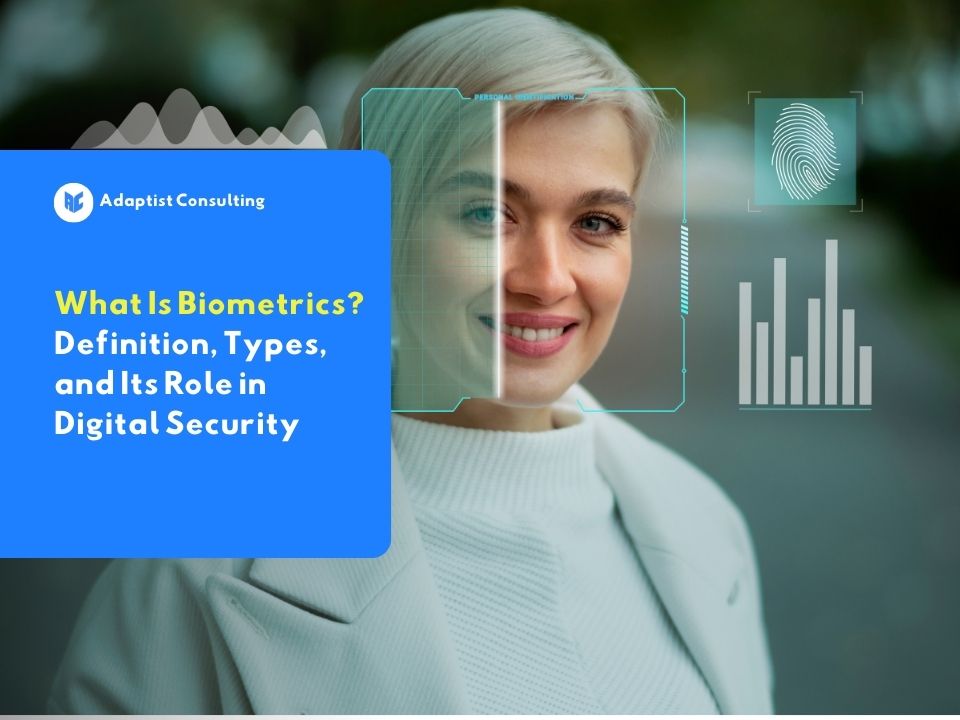
Conventional security methods in the digital era, such as passwords or PINs, are beginning to show their weaknesses. The risk of data leakage due to weak passwords or brute force attacks forces companies to seek new security standards.
Biometric technology arrives as a revolutionary solution offering a balance between high security and user experience. Unlike passwords that must be remembered, biometrics are an inseparable part of ourselves.
What Is Biometrics?
In the context of cybersecurity, biometrics is an authentication technology that verifies an individual’s identity based on the measurement of unique biological or behavioral characteristics.
This system works by scanning a user’s physical attributes or behaviors, then converting them into digital data (a template). This data is then matched against a stored database to grant or deny access rights.
The main advantage of biometrics lies in its inherent nature. You don’t need to carry a physical token or remember complex number combinations; your identity is the access key itself.
Understanding Types of Biometric Authentication
Biometric technology is divided into two main categories: physiological (physical) characteristics and behavioral characteristics. Deep understanding of these two types is crucial for companies to determine the method most suitable for their business risk profile.
1. Physiological Biometrics (Biological/Morphological)
This category focuses on the physical structure of the human body, which tends to be static and does not change significantly over time. Here are the most commonly used methods:
- Fingerprint
This is the oldest and most widely adopted form of biometrics globally. Scanners analyze ridge and valley patterns as well as minutiae points on fingertips. Due to the uniqueness of these patterns in every individual, fingerprints offer very high accuracy with relatively affordable implementation costs. - Face Recognition
This technology maps facial features mathematically, measuring the distance between eyes, jaw shape, and nose contours. Modern algorithms are even capable of liveness detection to distinguish a real face from photos or 3D masks, making it a new standard in mobile device security and building access control. - Iris & Retina Recognition
Often considered the gold standard in biometric security, this method scans unique patterns in the iris or blood vessels at the back of the eye (retina). Since these organs are well-protected and extremely difficult to forge, eye scanning is often used in high-security environments like data centers or military facilities. - DNA Matching
DNA analysis provides nearly absolute identification precision. However, due to its time-consuming process and high cost, this method is more often used in forensics or law enforcement than for daily corporate access authentication. - Hand Geometry
This system measures the physical structure of the hand, including palm width, finger length, and hand thickness. Although less popular than fingerprints due to large device size, hand geometry remains effective for identity verification in industrial or construction environments where fingerprints might be dirty or eroded.
2. Behavioral Biometrics
Unlike physical traits, behavioral biometrics analyze unique patterns in how someone does something. This technology is often used as an additional security layer (continuous authentication).
- Keystroke Dynamics
This method analyzes a user’s typing rhythm. The system records dwell time (duration a key is pressed) and flight time (time moving between keys). These typing patterns are very difficult for bots or hackers to mimic, making it an effective shield against account theft. - Voice Recognition
Voice analysis combines physiological aspects (vocal tract shape) and behavioral aspects (intonation, accent, and speech speed). This technology is highly relevant for customer verification in phone banking services or virtual assistants, although it is susceptible to background noise interference. - Mouse Dynamics
This system monitors mouse cursor movement patterns, including speed, direction, and clicking habits. Every individual has a unique way of operating a mouse, which can be used to detect anomalies if an account is taken over by unauthorized parties. - Gait Analysis
This technology identifies someone based on how they walk. Sensors or cameras analyze step patterns, balance, and body sway. This method is very useful for surveillance in public areas or corporate corridors without requiring direct interaction from the user. - Signature Analysis
Modern digital signature verification doesn’t just look at the visual shape of the signature. The system analyzes pen pressure (on touch screen devices), stroke speed, and writing order to validate authenticity and prevent document forgery.
Key Benefits of Using Biometric Technology
Biometric adoption is not just a trend, but a strategic necessity to mitigate modern security risks. Here are the tangible impacts on business operations:
1. High Security Accuracy
Biological characteristics are extremely difficult to replicate or steal compared to alphanumeric passwords. Hacking risks due to phishing or social engineering can be drastically suppressed because attackers need the physical presence of the genuine user.
2. Practical and Fast Identification
Time efficiency is a valuable currency in business. Biometrics cuts login time to seconds. Employees no longer need to type long passwords or wait for OTP emails, ultimately increasing work productivity.
3. Non-Transferable
The issue of password sharing or access card lending between employees can be eliminated. Biometrics ensures that the individual accessing the system is truly the authorized person, enforcing accountability principles within the organization.
4. Audit Efficiency
Every access using biometrics leaves an irrefutable digital trace. This facilitates IT teams and auditors in performing activity tracking (audit trail) for incident investigation needs or compliance with data privacy regulations.
Read also: Biometric IAM in Indonesia: High Security vs Privacy Challenges
Examples of Biometric Authentication Usage
The flexibility of biometric technology allows it to be applied across various industrial sectors. Here are real-world implementations:
- Physical & Digital Access Control
Companies use face or fingerprint scanners to replace physical keys on server room doors. In the digital realm, biometrics become the main gateway for logging into work laptops or internal corporate applications containing sensitive data. - Multi-Factor Authentication (MFA)
Biometrics are usually not used alone in security systems. They function as a way to recognize who you are, combined with other methods like passwords or mobile phones. This combination makes security systems far more secure. - Banking Transaction Verification
The financial sector utilizes biometrics to validate digital payments. Authorization for large fund transfers now often requires face or fingerprint scanning to prevent fraud and customer account takeover. - Employee Attendance
Modern HRIS systems use facial biometrics with GPS coordinates for attendance recording. This is effective in preventing “buddy punching” practices and ensuring accurate payroll data for the company.
Tips for Choosing a Biometric-Based Access Management Solution
Biometric implementation must be supported by robust identity management infrastructure. Without proper governance, sensitive biometric data can actually become a new security loophole.
In choosing an Identity and Access Management (IAM) solution that supports biometrics, pay attention to these three crucial aspects:
1. Ensure Flexible Authentication Support
Do not get fixated on just one biometric method, as every user has different preferences and devices. A rigid system will hinder user adoption.
2. Integration with Multi-Factor Authentication (MFA)
Relying on biometrics as the sole defense fortress is not best practice. Biometrics must be part of a layered security ecosystem.
3. Centralized Identity Management (Centralized IAM)
Biometric data and user access rights must be managed in one unified platform to prevent data fragmentation that complicates audits.
Ready to Manage Digital Identities as a Business Security Strategy?
Request a demo today and discover how IAM solutions centralize user logins through Single Sign-On (SSO), automate employee onboarding, and protect company data from unauthorized access without disrupting productivity with repeated logins.
Conclusion
Biometrics is not just future technology; it is the current security standard offering solutions to the weaknesses of password-based systems. The transition towards a passwordless era promises higher security and a smoother user experience.
However, biometric effectiveness relies heavily on the management system behind it. Integrating this technology with a reliable identity management platform will ensure your business is protected holistically, from identity validation to access governance.
With the support of Adaptist Prime, your company can build a digital ecosystem that is secure, time-efficient, and ready to grow without sacrificing data protection or user convenience.