









Brute Force Attacks: Definition and Fatal Risks for Enterprise
January 9, 2026
Privileged Access Management (PAM): Definition and Its Importance in BusinessData Protection
January 9, 2026Data Breach: Definition, Types, and Prevention Strategies for Enterprise
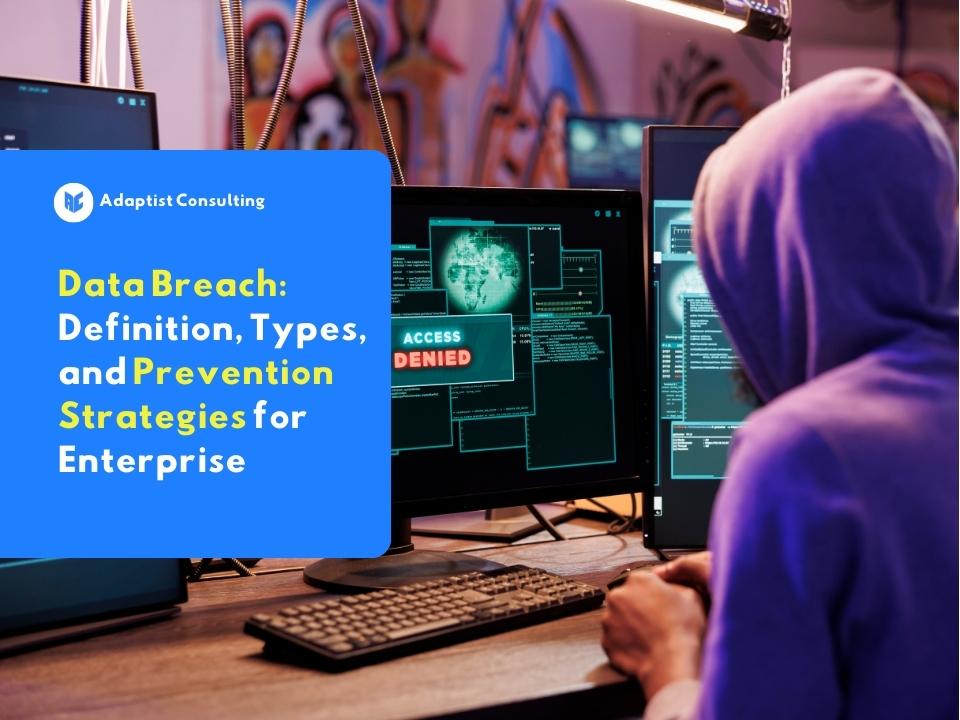
Data has evolved from a mere information asset into a critical foundation of business trust and continuity. However, behind its strategic value, data has also become a magnet for increasingly sophisticated and large-scale security threats.
A data breach is no longer just a technical risk; it is a major business risk that threatens operational stability, financial performance, and organizational reputation.
According to the IBM Cost of a Data Breach Report 2025, the average global cost of recovering from a data breach reaches millions of U.S. dollars per incident—approximately USD 4.4–4.88 million, and even higher in the United States. This data reinforces the reality of the substantial recovery costs organizations now face.
For corporate leaders, executives, and IT professionals in Indonesia, a deep understanding of the anatomy of a data breach has become a strategic necessity.
What Is a Data Breach?
A data breach is a cybersecurity incident in which sensitive, confidential, or protected information—such as personal, financial, or intellectual data—is accessed, copied, transmitted, or stolen by unauthorized parties.
It is important to distinguish a data breach from a data leak. A data leak typically refers to accidental exposure caused by misconfiguration or human error, without malicious intent. In contrast, a data breach is usually the result of a deliberate and planned cyberattack with exploitative objectives.
Read also: Data Leakage: Definition, Causes, and Prevention
The motivations behind these attacks vary widely, ranging from identity theft and ransomware extortion to industrial espionage and geopolitical operations. The impact on organizations is both severe and multifaceted—spanning legal action and substantial regulatory fines (such as those imposed under Indonesia’s Personal Data Protection Law / UU PDP), as well as long-term reputational damage and erosion of customer trust that can take years to rebuild.
Types of Data Breaches
Attackers use various methods to penetrate organizational defenses. Below are the most common attack vectors in enterprise environments:
1. Cyber Attacks & Malware
Malicious software (malware), particularly ransomware, represents one of the most significant threats today. Malware infiltrates corporate networks, encrypts critical data, and holds access hostage in exchange for ransom. Such attacks can completely paralyze business operations within hours.
2. Phishing & Social Engineering
This attack vector exploits human psychology rather than technical vulnerabilities. Attackers send fraudulent emails or messages that appear legitimate, tricking employees into revealing credentials or downloading malicious attachments. A single careless click can grant attackers access to internal systems, enabling data theft and malware propagation.
3. Insider Threats
Not all threats originate externally. Insider threats involve employees, former employees, or contractors who misuse legitimate access to steal data for personal gain or retaliation. These threats are particularly difficult to detect, as insiders often have deep knowledge of internal systems and workflows.
4. Credential Stuffing (Password Attacks)
Credential stuffing exploits the widespread habit of password reuse. Using automated bots, attackers test leaked username-password combinations from other platforms to gain unauthorized access. Without additional security controls such as Multi-Factor Authentication (MFA), accounts can be compromised within seconds.
5. Physical Device Theft
Cybersecurity cannot be separated from physical security. The theft of corporate laptops, external drives, or USB storage devices containing sensitive data constitutes a direct data breach. Without full-disk encryption, attackers can access the stored data without needing to breach the network itself.
6. Exploits (Vulnerability Exploitation)
Attackers continuously scan for vulnerabilities in unpatched software or operating systems. Zero-day exploits take advantage of flaws that are unknown or unaddressed by IT teams. Delays in patch management remain one of the most common entry points for these attacks.
Also read: Other articles related to Prime
How Do Data Breaches Happen?
Cyberattacks rarely occur instantly. Most follow a structured process commonly referred to as the Cyber Kill Chain:
- Research / Reconnaissance
Attackers analyze the target organization to identify weaknesses. This includes mapping network infrastructure, profiling employees via public platforms such as LinkedIn, and identifying exposed systems. - Attack / Infiltration
Once a vulnerability is identified, attackers launch an initial attack—often via phishing or software exploitation—to establish a foothold within the network. - Exfiltration
After gaining access and escalating privileges, attackers quietly locate high-value data and transfer it out of the organization’s environment to external servers.
Read also: What Is Identity and Access Management (IAM)
Common Targets of Data Breaches
Not all data is equally valuable to attackers. The most frequently targeted data types include:
- Personally Identifiable Information (PII)
Names, national ID numbers, addresses, and residency data. - Financial and Payment Data
Credit card numbers, bank account details, and transaction records. - Protected Health Information (PHI)
Medical records with high resale value for insurance fraud. - Intellectual Property (IP)
Trade secrets, source code, and confidential business strategies. - Business-Critical Data
Customer databases and legal or contractual documents.
How to Prevent Data Breaches
Effective prevention requires a defense-in-depth strategy that integrates both technology and policy.
1. Encrypt Sensitive Data
All sensitive data should be encrypted both at rest and in transit. Even if attackers succeed in stealing encrypted data, it remains unreadable without the corresponding decryption keys.
2. Employee Security Training
Transforming employees from the weakest link into a resilient human firewall requires continuous and relevant training. Through realistic phishing and vishing simulations, as well as ongoing cyber hygiene education, organizations can foster a security-first culture where employees remain vigilant and proactive.
3. Implement Multi-Factor Authentication (MFA)
Given the inherent weakness of passwords, MFA is a critical control. It verifies identity using multiple factors—something you know, have, or are. MFA should be enforced across all critical systems, including email, VPNs, and privileged accounts, with a preference for authenticator apps or hardware tokens over SMS-based methods, which are vulnerable to SIM-swapping attacks.
4. Identity and Access Management (IAM)
Strong breach prevention depends on strict access control based on the Principle of Least Privilege. Centralized IAM solutions enable organizations to manage identity lifecycles efficiently, enforce Role-Based Access Control (RBAC), and monitor audit logs in real time to detect anomalous access before it escalates into a major incident.
Identity Defense Solution: Adaptist Prime
Global cybersecurity statistics consistently confirm one reality: humans remain the most vulnerable security perimeter. Most data breaches do not begin with advanced hacking techniques, but with compromised user credentials.
Ready to Manage Digital Identities as a Business Security Strategy?
Request a demo today and discover how IAM solutions centralize user logins through Single Sign-On (SSO), automate employee onboarding, and protect company data from unauthorized access without disrupting productivity with repeated logins.
Adaptist Prime is an Identity & Access Management (IAM) platform designed to close these gaps by ensuring that only authorized individuals can access sensitive corporate data.
1. Conditional Access & Contextual Security
Adaptist Prime implements Conditional Access, evaluating each login attempt based on contextual signals such as location, IP address, and device health. If anomalies are detected—such as logins from unusual regions—the system automatically blocks access or enforces additional verification.
2. Layered Defense with MFA & SSO
To counter credential-based attacks, Adaptist Prime centralizes authentication through Single Sign-On (SSO) and reinforces it with flexible MFA options, including biometrics, magic links, and one-time passwords (OTP). This ensures that stolen passwords alone are insufficient for unauthorized access.
3. Threat Insight & Automated Remediation
Adaptist Prime provides real-time visibility into suspicious access behavior through Threat Insight. Beyond detection, it enables automated remediation by enforcing predefined security thresholds—such as automatically disabling accounts to prevent data exfiltration.
4. User Lifecycle Management
Many breaches occur through dormant or “zombie” accounts. Adaptist Prime automates provisioning and de-provisioning, instantly revoking access when employees leave or change roles. This significantly reduces insider threat risks and closes security gaps often missed in manual audits.