










In the modern, connected workplace, application access security doesn’t stop at the login process. Many risks arise after a user successfully logs in—from sessions left active for too long, stolen tokens, to undetected changes in user behavior. This is where session management becomes a critical foundation for maintaining security and consistent access across enterprise applications.
While it may sound technical, session management plays a major role in preventing account hijacking, protecting sensitive data, and ensuring that every access session runs according to organizational policies.
What is Session Management?
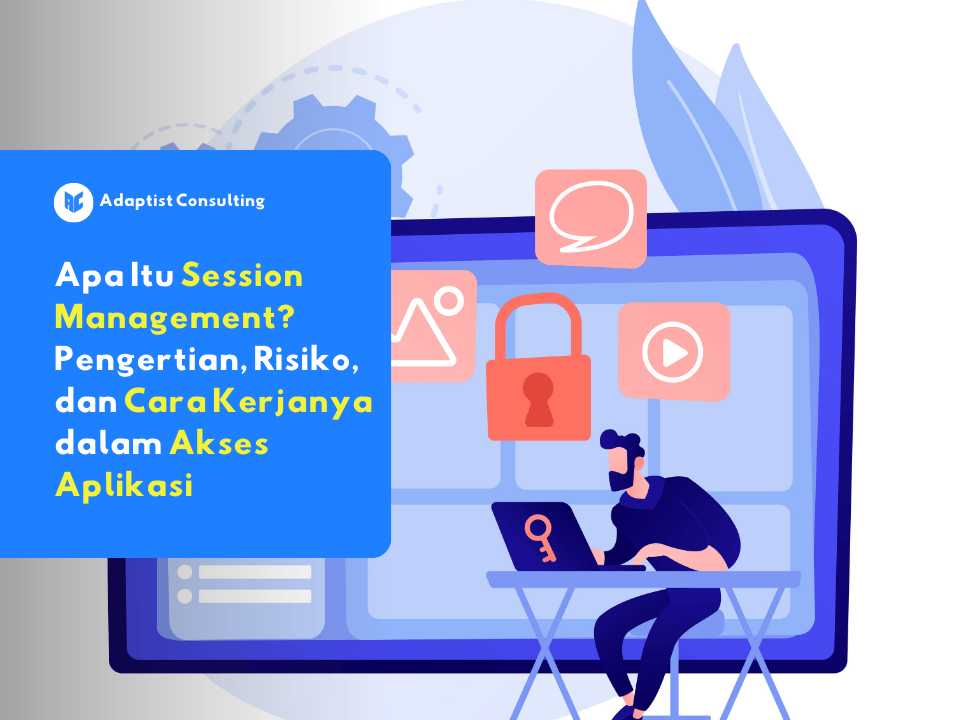
Session management is the process of managing, monitoring, and securing a user session after a successful login. This session includes the token, activity duration, access location, and all behavior that occurs while the user is connected to the application.
In many security breaches, attackers do not rely on brute-force login attempts. Instead, they exploit valid sessions by stealing session tokens through malware, public Wi-Fi, or phishing attacks and then use those tokens to take over accounts without entering passwords.
With good session management, companies can identify unusual activity, terminate risky sessions, or request re-authentication.
Session Management in the OWASP Global Security Standard
To understand the importance of session management, we need to understand OWASP. OWASP is a global, non-profit organization focused on improving software security. One of its most significant contributions is the OWASP Top Ten.
In the OWASP Top Ten issues, Authentication and Session Management consistently falls into the high-risk category. Issues highlighted by OWASP include:
- Easy to guess session token.
- Unencrypted session ID.
- Session that does not end after logout.
- There is no timeout mechanism.
Even if an application uses modern authentication, security can still be compromised if session management is neglected. The OWASP standard emphasizes that user sessions must:
- Unique and unpredictable.
- Bound to user context
- Have a time limit.
- Can be revoked at any time if there is a risk.
Why is Session Management Important for Application Security?
Session Management isn’t just a technical feature, but part of a comprehensive security strategy. The main reasons are:
1. Protecting against Session Hijacking
Essentially, Session Hijacking occurs when an attacker succesfully steals a user’s active session token. With this token, the attacker can directly acces the system without needing to log in again. This attack can occur via public Wi-Fi networks, malware on the device, and cross-site scripting attacks.
To mitigate this risk, organizations must equip their systems with encrypted tokens, regular token rotation, and session binding to specific devices or IP addresses.
2. Maintaining the Security of Cloud Application Used by Many Employees
In modern work environments, multiple users can access a single cloud application from various devices and locations. Without proper session management, sessions can remain active even after users stop working. This opens up opportunities for third parties accessing the device to exploit the active sessions.
With proper session management, IT teams can:
- Ending the session for employees who have resigned.
- Detect suspicious duplicate logins.
- Limit session duration on unknown devices.
These are important aspects in maintaining cloud application security, especially for companies that have a hybrid work system.
3. Supporting Zero Trust Implementation
Zero Trust requires continous verification, not just at the first login. Each session allows for reassessment of a user’s identity throughout the session. If access patterns change, such as moving countries within minutes or engaging in unusual activity, the system can require additional verification or completely terminate access.
Learn Zero Trust Security
Zero Trust Security is a security strategy that has become an urgent need for organizations amidst the high risk of cyber attacks and access abuse.
Zero Trust Security
Deepen your understanding of Zero Trust Security and learn its principles and implementation in depth by downloading this PDF. Your data security is our priority.
It also plays a vital role in Continuous Access Evaluation, where the system can reconfigure, restrict, or terminate sessions in real-time as risks levels increase.
4. Meet Security Compliance Requirements
Security audits such as ISO 27001, SOC 2, and PCI DSS require organizations to implement sessions monitoring mechanisms, including session timeouts and sensitive access controls. Session management helps companies audit by providing:
- Session activity log.
- Timeout control.
- Forced logout mechanism.
How is Session Management Done?
1. Session Token Creation
When a user logs in, the system generates a unique token that serves as the session identifier. This token is monitored throughout the user’s connection. This token can be a webtoken or a JWT (JSON Web Token), which securely contains the user’s identity information.
2. Session Risk Score Assessment
Each login activity is analyzed based on the user’s location, device, time, and habits. If the risk score is high, the system requires additional verification such as MFA. Each session is evaluated based on factors such as:
- Login location.
- Device used.
- User activity.
3. Session Activity Monitoring
During a session, the system monitors whether activity follows normal patterns. Sudden and unusual activity is treated as a risk. System monitoring is performed if activity is detected, such as:
- Access outside of business hours.
- Unusual activity of short duration.
4. Idle Timeout & Forced Logout
A session will automatically end after a specified period of inactivity. This reduces the risk of unauthorized access due to unattended devices.
5. Session Revocation
The system can automatically terminate sessions when it detects significant changes in device or location. When it identifies a threat, the system immediately revokes the session without waiting for the user to log out manually.
Session Management Techniques
After understanding how session management works, the next step is to learn the methods commonly used to secure user sessions. These methods are intended to ensure that tokens are not misused and that the user experience remains comfortable and efficient.
Some commonly used techniques include:
- JWT (JSON Web Token) for stateless authentication.
- Webtokens with limited validity.
- Protection against Cross-Site Request Forgery (CSRF) with custom tokens.
- Token rotation after re-authentication.
- Binding tokens to device contexts.
Risks if Session Management is Not Implemented
Application security systems can experience significant, often unnoticed, flaws without proper session management. Beyond technical issues, these risks can include:
- Session token can be stolen and used to take over accounts.
- Users forget to log out of public devices.
- Applications remain active even when the user is no longer with the company
- Auditors discover open, uncontrolled sessions.
- Data breaches increase due to unauthorized use of old sessions.
How to Strengthen Session Management in Your Company
Enterprises must implement a layered strategy that combines strong authentication, continuous session monitoring, and access controls tailored to different risk levels. One important step is to combine session management with MFA tokens.
- Implement idle timeouts appropriate to the level of data risk.
- Use MFA for sensitive access.
- Monitor user access patterns in real time.
- Use risk-based authentication technology.
- Implement automatic session revocation for risky activities.
So, with a centralized approach and consistent policies, it can be an effective security layer without disrupting user productivity.
Conclusion
In conclusion, session management serves as a foundational element of modern application security, extending far beyond basic login functionality. As a result, the way organizations manage user sessions directly influences their ability to prevent session hijacking, support Zero Trust principles, and meet regulatory requirements.
Ready to Manage Digital Identities as a Business Security Strategy?
Request a demo today and discover how IAM solutions centralize user logins through Single Sign-On (SSO), automate employee onboarding, and protect company data from unauthorized access without disrupting productivity with repeated logins.
Solutions like Adaptist Prime are a strategic choice for businesses looking to centrally and adaptively manage user identity, access, and sessions. Adaptist Prime supports multi-factor authentication (MFA) and is ready for the dynamic demands of Zero Trust in the cloud.
FAQ
IT teams will obtain session activity logs, login history, and session disconnection controls to demonstrate security standards during audits.
No. When organizations neglect session management, small to medium-sized applications remain vulnerable to session hijacking, especially cloud applications accessed from multiple devices.
Session Management is the process of managing user login sessions and ensuring that users remain secure while accessing applications.