










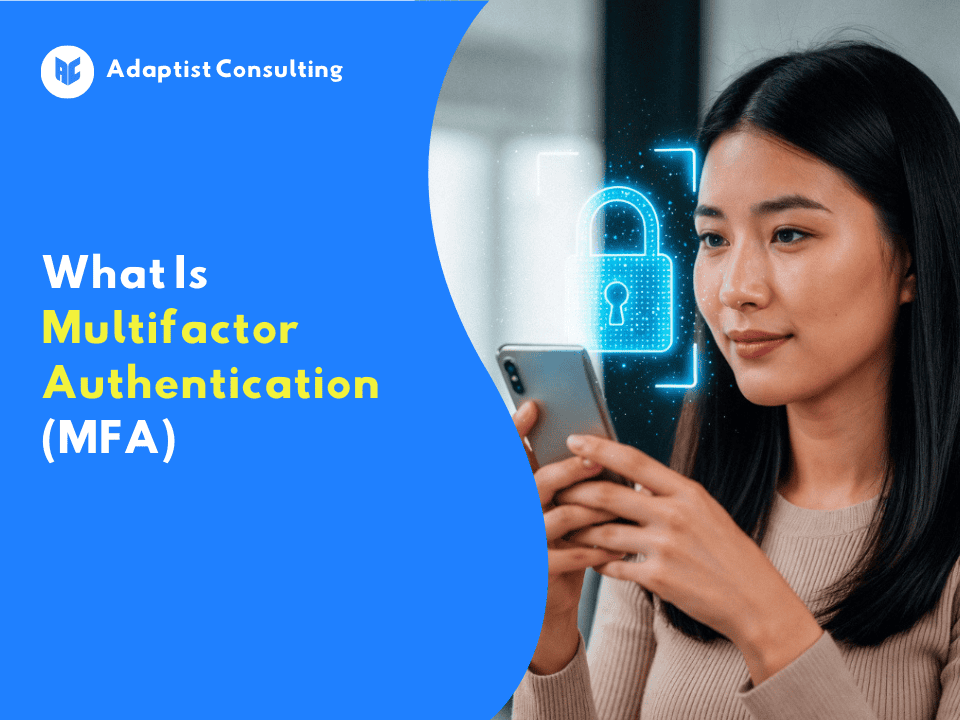
What is MFA? This question is often asked by IT professionals as well as everyday users who are becoming more aware of the importance of digital security. Multi-Factor Authentication is a security method that requires users to go through more than one identity verification step before gaining access to a system or application.
Different Beetwen MFA and 2FA
Many people assume that MFA and 2FA are the same. Conceptually, both are designed to add an extra layer of security beyond passwords. However, there are important technical differences to understand.
MFA → refers to an authentication system that uses two or more verification factors at the same time. Its purpose is to strengthen account security by adding additional layers, such as PINs, fingerprints, facial recognition, or push notifications.
2FA → on the other hand, uses only two verification factors. This typically includes a password combined with a one-time code (OTP) sent via SMS, email, or an authenticator app.
Because of this, many organizations choose MFA over 2FA as their standard security approach. The more verification factors involved, the lower the risk of account takeover.
Why is MFA Important?
Business digitalization continues to grow alongside the widespread use of cloud-based applications. At the same time, cybercriminals are increasingly using techniques such as phishing, credential stuffing, social engineering, and brute-force attacks to gain unauthorized access to accounts. Without additional security layers, a single compromised password can open the door to an entire system.
Several real-world incidents highlight how weak or absent MFA implementation can create serious security gaps.
- In February 2025, Mars Hydro experienced a major data breach that exposed approximately 2.7 billion records. This unsecured data put millions of smart devices at risk, allowing attackers to potentially take control of devices and monitor user activity. Even though the database was later secured, the incident underscored the importance of strong system protection and transparency to maintain customer trust.
- Meanwhile, the Pusat Data Nasional Sementara (PDNS) in Indonesia suffered a data breach in 2024 that had wide-ranging consequences—not only technically, but also economically and in terms of public trust. Sensitive information such as personal identities and financial data was exposed, increasing the risk of fraud, identity theft, and extortion. This case clearly illustrates the need for stronger access security and more resilient digital systems.
MFA acts as a critical safeguard when passwords are compromised. Without MFA, systems become far more vulnerable to unauthorized access, which can lead to business losses, identity theft, and long-term damage to an organization’s reputation.
How MFA Works
To better understand is in a practical way, it helps to see how the system works. MFA requires users to go through several verification steps to confirm their identity before access is granted. Below is a general overview of the process:
1. Login using Username and Password
The user starts by entering their username and password as the first verification step.
2. Second-Factor Verification
Once the password is confirmed, the system asks for additional verification, such as:
- A one-time password (OTP) sent via SMS, email, or an authenticator app
- A push notification sent to a registered device
- A code generated by a hardware security token
3. Third-Factor Verification
For higher security levels, the system may request another factor, such as a PIN, fingerprint scan, facial recognition, or voice recognition.
4. Acces Granted
Access is granted only after all required factors are successfully verified. If any step fails or is skipped, access will be denied.
Benefits for Businesses
Implementing MFA offers significant advantages, especially in today’s increasingly complex digital security landscape, including:
- Protecting sensitive data, it helps reduce the risk of unauthorized access, even if passwords are compromised.
- Reduced cyberattack risks, it helps defend against common attacks such as phishing, brute-force attacks, and credential stuffing by requiring more than one verification factor.
- Supporting regulatory compliance, many security standards and regulations, such as ISO 27001, PCI-DSS, and GDPR, recommend or require MFA for systems that handle sensitive information.
- Building customer trust, when customers know that an organization uses MFA, their confidence in how their data is protected increases significantly.
- Limiting the impact of data breaches, it reduces the potential damage of security incidents by preventing attackers from accessing systems using stolen passwords alone.
Challenges of Implementing MFA
While MFA offers a higher level of security, its implementation isn’t always smooth sailing. In reality, companies commonly face a number of challenges, both from users and from existing system readiness.
Some of the most common challenges include:
- Considered cumbersome by users, the additional login steps sometimes make access slower, especially for those unfamiliar with the system.
- Risk of losing verification devices, if a phone or authentication device is lost, recovery steps must be carefully implemented to avoid disrupting activities.
- System and infrastructure readiness, not all legacy systems directly support it, requiring technical adjustments.
- Potential for user error, without sufficient knowledge, users may approve unusual MFA requests, as seen in the MFA Fatigue Attack.
- Additional costs and management, implementing MFA at the enterprise level requires significant expenditures, both in terms of technology and IT resources.
Tips for Implementing MFA
To maximize the effectiveness of your MFA implementation, consider the following tips:
1. Choose Token or App-Based
This option is more secure than SMS, as SMS is vulnerable to attacks via SIM Swap.
2. Enable MFA on All Critical Accounts
This includes business email, cloud-based portals, internal systems, and collaboration tools.
3. Educate Users
Teach your team not to approve it requests they didn’t initiate to avoid MFA Fatigue Attacks.
4. Add a Secure Recovery Method
Prepare recovery codes or other secure yet convenient alternatives in the event of a lost device.
5. Integrate with Other Access Policies
Such as role-based access control, monitoring for suspicious logins, and application firewalls.
Also Read: The Best MFA Solution for Companies: An Effective Dual-Layer Security System
Ready to Manage Digital Identities as a Business Security Strategy?
Request a demo today and discover how IAM solutions centralize user logins through Single Sign-On (SSO), automate employee onboarding, and protect company data from unauthorized access without disrupting productivity with repeated logins.
Conclusion
What is MFA? – In short, Multifactor Authentication, is a crucial step in strengthening a company’s digital security. By combining more than one authentication factor, organizations can protect sensitive data while increasing customer trust. This makes the system more secure.
For more insights, read AWS on MFA or the Cisco guide on MFA.
With innovative solutions like Adaptist Prime, organizations can enhance security, improve efficiency, and deliver a better customer experience.
FAQ
Ideally, yes, especially for businesses that manage sensitive data, financial data, or large customer service teams.
It may seem like an extra step at first, but modern implementations like push notifications can actually be faster than SMS.
Not all systems are 100% secure, but it drastically reduces risk compared to using passwords alone.