






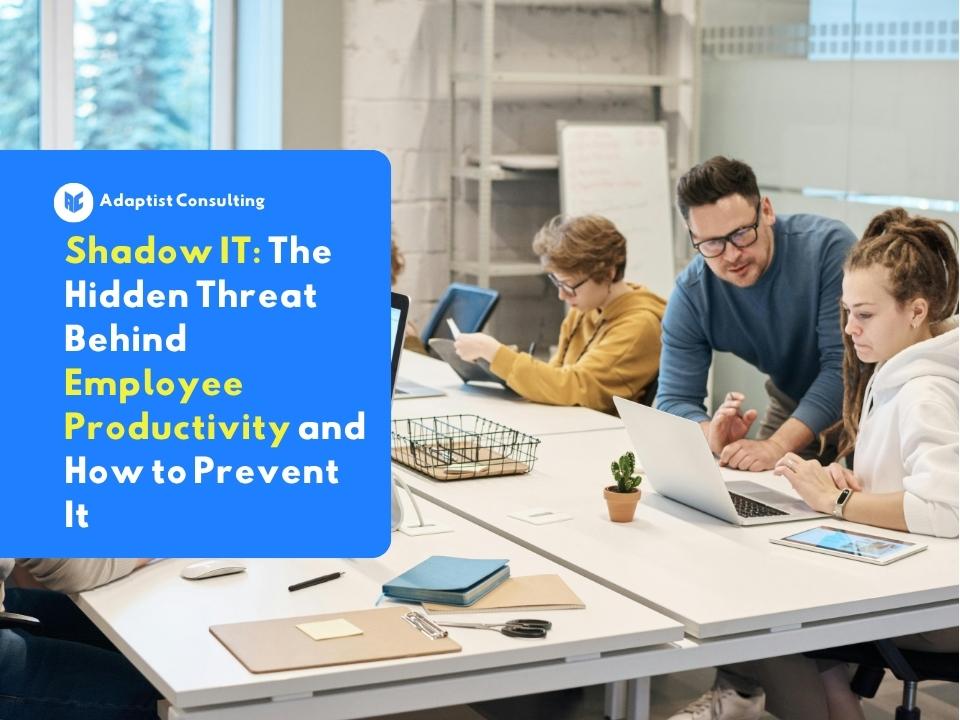
In the digital era, fast-paced work demands often lead employees to secretly use their own applications or programs without the knowledge of the company’s IT (Information Technology) team. This hidden practice, known as Shadow IT, actually carries immense cybersecurity risks, although it is often unnoticed by management.
Even the smallest security loophole from this habit can trigger a data breach resulting in massive financial losses. To protect important company data, the first step is to recognize this invisible threat. Let’s thoroughly discuss the root of the problem and how you can prevent it.
What is Shadow IT?
Shadow IT is the use of devices, applications, or technology services by employees without official permission from the IT team. This practice generally occurs not out of malicious intent, but purely so that work can be completed faster and more practically.
Despite good intentions, the habit of using external services like free file-sharing apps or personal cloud storage can create an operational “blind spot”. Applications that escape this supervision do not go through company security checks, such as malware scanning or data encryption standards.
As a result, your company’s digital defense fortress can be easily breached through vulnerabilities in those applications. The security team will also have difficulty conducting risk mitigation if they do not know from the start what applications are being secretly used by employees.
Read also: 7 Types of Cyber Attacks Threatening Employee Identities
Why Employees Engage in Shadow IT
Fundamentally, employees do not intend to sabotage the company’s system when using external applications. Most of them are merely looking for innovative and practical ways to complete their workload. The initial intent is purely driven by a professional attitude to work more efficiently.
However, this shortcut actually creates serious cyber vulnerabilities. The use of fragmented devices makes it impossible to apply company security standards comprehensively. Research from Gartner reinforces this phenomenon: as many as 41% of employees secretly use technology outside of IT supervision, and this is predicted to surge to 75% by 2027.
Here are some key structural factors driving this practice to proliferate within your corporate environment:
1. Chasing Speed and Productivity
Official IT facilities provided by the company are often considered too slow, outdated, or rigid by modern employees. Chased by deadlines and a dynamic work rhythm, the bureaucratic process of requesting approval to use a new application is felt to severely hinder their workflow.
To get around this, employees ultimately take the initiative to find shortcuts. They use public Software as a Service (SaaS) like document conversion tools, design platforms, or online task management that can be accessed in just seconds. From their perspective, daily operational smoothness is far more urgent compared to complying with corporate security standards.
2. Hybrid Work Trends and Personal Devices (BYOD)
The drastic shift toward remote or hybrid work models has accelerated the use of personal devices for office work affairs. Today, the boundary between company-owned assets and individually owned devices (such as employee laptops or smartphones) has become very blurred.
This trend, known as Bring Your Own Device (BYOD), renders traditional corporate network control systems no longer relevant to stem threats. Citing data from a BetterCloud survey, about 65% of SaaS applications accessed for work purposes are actually never approved by the IT team. Therefore, direct supervision of the hardware used by employees (endpoint monitoring) is now a crucial key.
3. Lack of Cybersecurity Education
Many professional staff are completely unaware of the technical impacts and cyber risks of the third-party applications they use. They often assume that all commercial platforms popular in the market automatically possess robust security systems. This mindset is highly misleading and dangerous for the company.
Without adequate information security training programs (security awareness), humans will continue to be the biggest weak point in the corporate ecosystem. Cybercriminals very often exploit this negligence through fraudulent tactics or social engineering. Therefore, sustainable digital literacy education is essential to build a defensive wall from within.
Read also: The Importance of MFA in Modern Access Security?
4 Negative Impacts of Shadow IT on Company Security
This phenomenon is not merely an issue of violating internal company rules. Based on research from Gartner regarding digital asset management, the use of unofficial technology accounts for about 30% to 40% of total IT spending in large-scale companies (Enterprises).
Besides hidden cost waste, the direct threat to the security and integrity of company data is very real. Here are four destructive impacts you must watch out for:
1. Loss of IT Visibility and Control
Your IT team cannot possibly protect assets they do not know exist. The use of unofficial systems creates a “blind spot” in the corporate network. This causes the IT team to lose a comprehensive overview or an accurate system structure map.
This condition becomes very dangerous when a cyber attack occurs. The response team will have difficulty tracking the root cause because there are no activity logs stored centrally. As a result, the time required to handle the attack (Mean Time to Respond or MTTR) becomes very long, even though every second is precious when facing a hack.
To overcome this problem, companies need device monitoring solutions (Endpoint Visibility) capable of providing comprehensive infrastructure control, so that no more employee activities escape supervision.
2. Risk of Sensitive Data Leaks
Many free applications used by employees are not equipped with high-security systems or enterprise-standard encryption. When employees send or store confidential documents via these public platforms, the data is in an exposed position without adequate protection.
This security loophole becomes an easy target for hackers to steal confidential information or clients’ personal data. If a data breach occurs, the impact is not only financial but can also destroy your company’s reputation and stock value in the long term.
3. Regulatory Compliance Violations
Almost all industries today are bound by strict data protection laws. The use of cloud storage services that are not officially audited almost certainly violates these legal protocols. This certainly endangers the privacy of clients who have entrusted their data to you.
Violations of these regulations can lead to massive financial fines and even lawsuits for the board of directors. Therefore, it is very important for companies to align internal policies with international standards, such as ISO/IEC 27001, to ensure every piece of data at the network endpoints remains secure and legally compliant.
4. IT Budget Waste
Often, various divisions within a company purchase application subscriptions independently without coordination. This creates functional overlap (redundancy), where the company pays for several different services that actually have the same utility.
These hidden costs slowly erode company profits and hinder investment in more strategic technologies. Conducting a comprehensive application audit is crucial to eliminate inefficient spending and ensure the IT budget is used precisely on target.
Read also: Vendor Risk Management (VRM): Definition, Strategy, and Enterprise Compliance Framework
Conclusion
Shadow IT is a cybersecurity challenge that generally stems from employees’ desire to work faster and more efficiently. Although it aims to spur team productivity, the risks of sensitive data leaks and regulatory violations it causes are too great for businesses. Therefore, every modern company needs to find a balanced strategy between strong security protocols and ease of work access.
Instead of merely enforcing strict bans, a more effective approach is to build a secure and responsive IT infrastructure. Continuous security education needs to be supported by a centralized access management system. With transparent access governance, companies can effectively minimize the risk of unofficial application usage.
As your strategic partner, Adaptist Prime is here to overcome access security challenges amidst today’s high application usage. Through the Single Sign-On (SSO) feature, this platform provides convenience for employees to access various work platforms securely with just a single login (centralized authentication).
Ready to Manage Digital Identities as a Business Security Strategy?
Request a demo today and discover how IAM solutions centralize user logins through Single Sign-On (SSO), automate employee onboarding, and protect company data from unauthorized access without disrupting productivity with repeated logins.
Supported by adaptive Conditional Access capabilities, Prime also intelligently screens entry permissions based on location, IP address, and device type to block access risks from unauthorized parties.
FAQ
Shadow IT is a general term for all unofficial software and hardware used by employees, while Shadow Cloud specifically refers to the use of cloud computing services without permission from the IT team.
Yes, because free messaging applications for consumers generally do not have an encryption level as strong as enterprise systems, risking the leak of communication data and confidential client information.
Companies can detect them through suspicious IT network traffic monitoring, regular access history checks, and corporate credit card bill audits to track illegal software subscriptions.
Under privacy laws, the company is the primary party bearing the burden of responsibility for customer protection and regulatory sanctions, even if the leak originated from the negligence of internal employees.
Regular comprehensive security audits are essential to monitor what applications are operating, close vulnerability loopholes before they are exploited by hackers, and ensure compliance with the latest regulations.