







Ticket Backlog Piling Up? Beware of Its Impact on Your Business
February 26, 2026
Chatbots and Ticketing Systems Boost Productivity
February 26, 2026Implementation of User Access Management as Prevention Against Illegal Internal Access
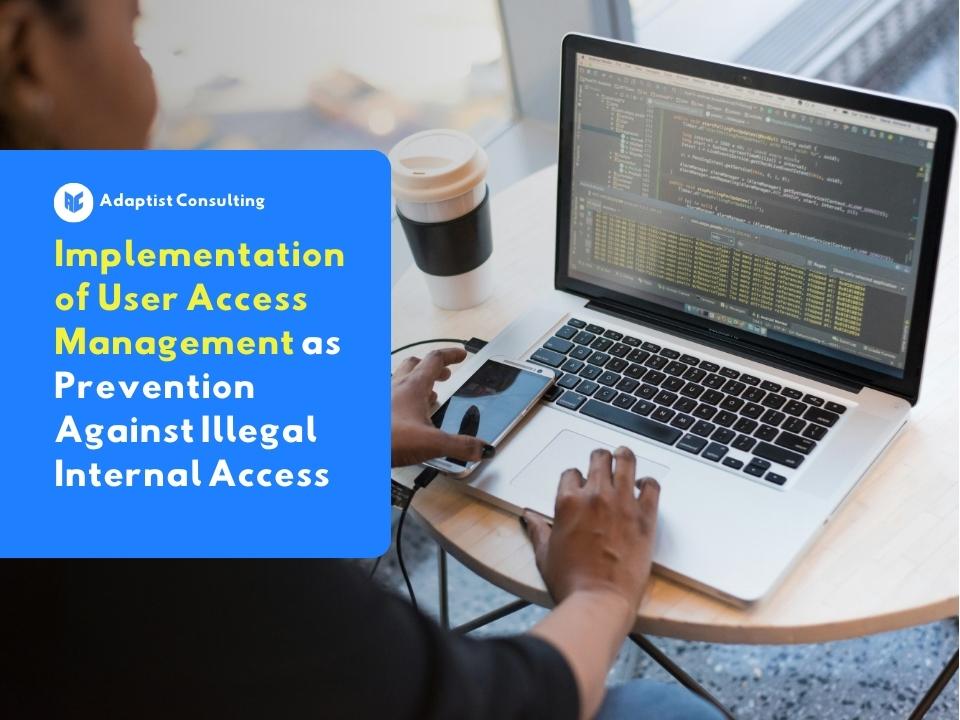
Managing who has the right to access sensitive company data is no longer merely an administrative function of the IT department. Amidst an increasingly complex digital landscape, data breach incidents are often triggered by internal factors, whether due to negligence, access rights misuse, or uncontrolled overlapping authority.
In this context, implementing a User Access Management (UAM) strategy is not just an operational practice, but part of the foundation of modern business security defense.
What is User Access Management (UAM)?
Many business leaders still equate User Access Management (UAM) with basic identity systems or simply the login process. This overly simplified understanding risks creating significant security gaps.
The difference lies in the focus:
- Identity and Access Management (IAM) answers the question: “Who are you?” through the authentication process.
- UAM answers the more critical question: “What are you allowed to do?” after that identity is validated.
In other words, authentication ensures someone is a legitimate user, while UAM ensures that the legitimate user can only access resources they are actually authorized for.
According to various security reports from global research firms like Gartner, this separation of focus between authentication and authorization is highly crucial. Without strict access control, even a legitimate internal user still potentially becomes a risk source if they possess access rights exceeding their role’s needs.
5 Main Components in the UAM Ecosystem
To build a strong internal defense system, organizations need to understand the fundamental components within a modern UAM ecosystem.
1. User Provisioning & Deprovisioning
This component manages the user access lifecycle (user lifecycle management) from their first day of work until the end of their involvement in the company.
- Provisioning ensures new employees immediately gain access relevant to their roles quickly and in a standardized manner.
- Deprovisioning automatically revokes all access when an employee resigns, a contract ends, or they switch roles.
Without a disciplined deprovisioning mechanism, orphan accounts can remain active and become serious security vulnerabilities.
Ready to Manage Digital Identities as a Business Security Strategy?
Request a demo today and discover how IAM solutions centralize user logins through Single Sign-On (SSO), automate employee onboarding, and protect company data from unauthorized access without disrupting productivity with repeated logins.
2. Access Modification
Organizational structures are dynamic. Promotions, job rotations, and changes in responsibility are natural occurrences in business operations.
The Access Modification feature allows administrators to adjust access rights in real-time. When an employee switches divisions, the system will:
- Remove old access that is no longer relevant.
- Grant new access rights according to the latest role.
This step is important to prevent accumulated privileges that no longer align with the user’s actual responsibilities.
3. Authentication & Authorization
This component serves as the primary line of defense in a layered security architecture.
- Authentication verifies user identity, generally through a combination of passwords, biometrics, or Multi-Factor Authentication (MFA).
- Authorization determines what resources can be accessed after identity is validated.
In best practices referring to standards such as those issued by NIST (National Institute of Standards and Technology), the authorization process must be based on clearly defined policies, not ad hoc manual decisions. Thus, access is granted based on systematic rules—not just informal approval.
4. Role and Policy Management
Managing access rights one by one for each individual is highly inefficient and prone to error. Therefore, modern UAM relies on the Role-Based Access Control (RBAC) approach.
In this model:
- Each role has a specific access policy template.
- Employees assigned to that role automatically inherit the same access rights.
This approach creates consistency, reduces human error, and simplifies large-scale management. Policies can be adjusted based on department, job level, or data sensitivity.
5. Access Reviews and Auditing
Access rights management does not stop once the system is implemented. Without periodic evaluation mechanisms, initially neat access controls can slowly become irrelevant alongside changes in organizational structure and business dynamics.
An Access Review is the process of periodically re-examining user access rights to ensure their alignment with current roles and responsibilities. In practice, managers or system owners will verify whether their team members still need specific access. This step is effective for identifying excessive, unused, or irrelevant access.
Meanwhile, auditing functions as a mechanism for recording and tracking all access activities in the form of an audit trail. Every login, access right change, and denied access attempt is documented as a digital footprint. This documentation is highly important for incident investigation needs, regulatory compliance, and forensic proof in the event of a security breach.
The combination of periodic reviews and systematic auditing helps organizations detect the phenomenon of privilege creep, which is the accumulation of excessive access rights due to promotions or job rotations not followed by the revocation of old access. Without this control, the risk of internal access misuse can increase significantly, even on legitimate user accounts.
Read also : Whitelist vs Blacklist: Which Security Strategy is Right for Your Business?
Types of User Access Management Based on Target
The implementation of User Access Management (UAM) is not a one-size-fits-all endeavor. The access security strategy must be tailored to the user profile and the level of risk inherent in their relationship with the organization.
Generally, UAM approaches can be categorized based on target users as follows:
| Target Type | Who are the Users? | Control Focus |
|---|---|---|
| Internal UAM | Full-time employees, internal management, and operational staff. | Securing access to highly sensitive systems like ERP, corporate email, HR databases, and corporate intranet networks. In this scenario, the main challenge is not merely preventing illegal external access, but controlling internal access rights to remain relevant to each individual’s role. Risks such as privilege creep, access misuse, or operational negligence are primary concerns. |
| External UAM | Third-party vendors, independent contractors, business partners, and customers in a Customer IAM (CIAM) scheme. | Restricting access only to specific portals or systems, applying time-bound access, and network isolation so they do not connect directly to core corporate systems. External UAM requires stricter control because it involves entities outside the organizational structure. Approaches like network segmentation and context-based restriction become crucial to prevent lateral movement if an external account compromise occurs. |
Read also : Digital Security: Definition, Impact, and Threats Haunting Business
Advanced Security Principles Related to UAM
Implementing sophisticated tools will not be effective without a solid framework. You must integrate the following security principles into your corporate UAM strategy.
1. UAM in a Zero Trust Ecosystem
The traditional security paradigm relying on network perimeters is now obsolete. The Zero Trust model, popularized by the Cybersecurity and Infrastructure Security Agency (CISA), dictates that no entity is trusted by default, even if they are inside the internal network.
Learn Zero Trust Security
Zero Trust Security is a security strategy that has become an urgent need for organizations amidst the high risk of cyber attacks and access abuse.
Zero Trust Security
Deepen your understanding of Zero Trust Security and learn its principles and implementation in depth by downloading this PDF. Your data security is our priority.
In this context, UAM acts as the policy enforcement engine for Zero Trust. The system will perform continuous verification of identity, location, device, and access context before granting or maintaining permission for an application. Trust is dynamic and must be constantly validated.
2. Principle of Least Privilege (PoLP)
The Principle of Least Privilege (PoLP) is the golden rule in access management. This principle states that every user is only granted the minimum access level absolutely necessary to perform their tasks.
This approach significantly limits the blast radius if a security incident occurs. For example, if a marketing staff’s account is hacked, the attacker cannot access the financial system because the account inherently lacks access rights to that area. Thus, potential damage can be controlled from the outset.
3. Just-In-Time (JIT) Access
Administrative access rights that are permanent (standing privileges) are high-value targets for hackers. The Just-In-Time (JIT) Access concept is designed to reduce this risk by granting privileges only when absolutely needed.
The access is granted temporarily and bounded by a specific duration. After the task—for instance, server maintenance or system configuration—is completed, the administrative access rights are revoked automatically. This mechanism closes gaps that usually arise from high-privilege accounts that are continuously active.
Read also: Privileged Account Management: Enterprise Critical Access Protection Strategy
4. Segregation of Duties (SoD)
Segregation of Duties (SoD) aims to prevent the concentration of control in a single individual within a critical business process. This principle divides a sensitive workflow into several stages that must be executed by different parties.
As an illustration, an employee who initiates a vendor payment must not have the authority to approve or disburse those funds. UAM ensures this separation of roles is configured systemically so that conflicts of interest and potential fraud can be minimized.
5. Continuous Adaptive Risk and Trust Assessment (CARTA)
Modern security evaluation does not stop at the first login. The Continuous Adaptive Risk and Trust Assessment (CARTA) concept introduced by Gartner emphasizes the importance of continuous risk monitoring during a user session.
Through behavioral analysis and context monitoring, the system can detect anomalies in real-time. For example, if an account suddenly tries to download thousands of files or access data outside its normal pattern, UAM will respond adaptively. Actions taken could include requesting additional authentication, session restriction, to automatic account blocking.
This approach ensures security is proactive and responsive to ever-evolving threat dynamics.
Benefits of Using a UAM System for Companies
Investing in User Access Management (UAM) is not merely a technical decision, but a strategic step that directly impacts operational efficiency and business resilience. Beyond the security aspect, UAM contributes tangibly to cost optimization, productivity, and regulatory compliance.
Here are concrete benefits companies can experience:
- Software License Cost Reduction (Software ROI): Many organizations unknowingly pay for software licenses for inactive accounts. UAM automatically revokes access and licenses from users who resign, have contracts expire, or no longer need certain applications. This approach improves Software Return on Investment (ROI) by ensuring every license is truly used productively. On an enterprise scale, this efficiency can yield significant IT budget savings.
- Day-1 Productivity Enhancement: Traditional onboarding processes are often hindered by delays in granting application access. Consequently, new employees cannot work optimally on their first day. With an automated provisioning system, UAM ensures all relevant access is configured from the start. Employees can immediately access corporate email, ERP systems, and collaboration tools without waiting for manual IT team intervention. The result is increased productivity from day one of work.
- Preventing Insider Threats: Not all security incidents stem from external attacks. Threats can also emerge from within the organization, whether due to negligence or malicious intent. Through implementing principles like Least Privilege and policy-based access monitoring, UAM restricts user movement strictly to areas relevant to their responsibilities. With measurable controls, Insider Threat risks can be significantly minimized without hampering operational performance.
- IT Helpdesk Workload Efficiency: Password reset requests and manual access provisioning often dominate the IT Helpdesk workload. Implementing features like Single Sign-On (SSO) and self-service portals reduces user dependency on technical support for basic needs. This automation not only drastically lowers ticket volumes but also allows IT teams to focus more on strategic, value-adding business initiatives.
- Audit Readiness & Cross-Regulatory Compliance: Security audits and regulatory compliance demand transparent and well-documented access documentation. UAM provides centralized logging and audit trails that systematically record all user activities. This capability helps organizations meet international standards like ISO 27001 as well as various national regulations regarding data protection. With centralized visibility, the audit process becomes faster, more structured, and minimizes the risk of critical findings.
Conclusion
Access management is not just the process of granting usernames and passwords. It is a layered control ecosystem encompassing adaptive provisioning, Zero Trust principle enforcement, through to continuous risk evaluation.
With the right UAM architecture, organizations not only prevent illegal access—both from internal and external sources—but also optimize operational costs, increase employee productivity, and simplify regulatory compliance processes.
Ultimately, the implementation of solid User Access Management constitutes a crucial foundation in protecting corporate digital assets. Through an integrated Centralized Access Management approach, businesses gain full visibility over who accesses what, when, and for what purpose—an absolute prerequisite in modern security governance.
To overcome these complexities, Adaptist Prime answers the challenge of securing access amidst a multitude of applications and users. By combining IAM (Access) and IGA (Governance), Prime ensures the right people get the right access at the right time, while preventing up to 99% of access-related data breaches.
With the support of Adaptist Prime, you can simplify identity management, automate the employee access lifecycle, and ensure enterprise security compliance centrally.
FAQ
IAM focuses on overall user identity verification. Meanwhile, UAM is a specific part of the IAM ecosystem that regulates the authority and limits of user access after they have been successfully validated by the system.
This approach ensures no user or device is automatically trusted, even if they are inside the internal network. Every access request is always re-verified based on a dynamic security context.
This is a dangerous situation where employees continue to accumulate access rights over time, even though they have changed roles in the company. UAM prevents this through automatic access reviews and revocation.
UAM automates the revocation of paid software licenses from inactive employees. Additionally, self-service features like Single Sign-On drastically reduce the daily helpdesk ticket burden on the IT department.
No, UAM also secures access from external parties like supporting vendors and business partners. The system ensures they only get limited, time-bound access according to the needs of their work contracts.