










Background: Risks in the Digital Era
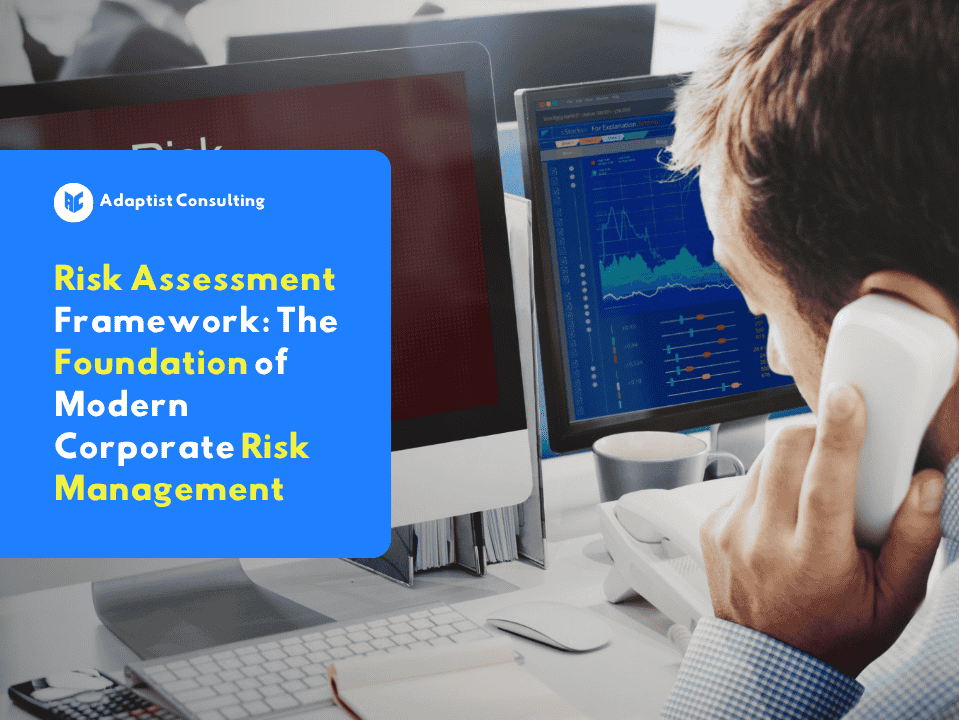
Modern companies face increasingly complex risks in the digital age—from data breaches and regulatory violations to operational threats that can disrupt business stability. Without a clear framework, it’s difficult for organizations to prioritize threats and determine effective mitigation steps. This is where the Risk Assessment Framework becomes the cornerstone of risk management.
What Is a Risk Assessment Framework?
A Risk Assessment Framework is a structured approach that helps organizations identify, analyze, and mitigate risks that may affect business operations. This framework not only addresses external threats such as cyberattacks but also internal risks like system failures or human error.
According to the NIST Risk Management Framework, this approach involves evaluating risks from technical, operational, and regulatory perspectives, helping companies maintain a balance between security and productivity.
Why Is a Risk Assessment Framework Important?
Implementing a Risk Management Framework provides several strategic benefits:
Structured Risk Identification: Helps organizations clearly identify and prioritize risks that need immediate action.
Regulatory Compliance: Supports global standards such as ISO 27001 and Indonesia’s Personal Data Protection Law (Law No. 27 of 2022).
Faster Decision-Making: Provides management with clear, data-driven insights for mitigation strategies.
Enhanced Trust: Demonstrates to clients and regulators that the organization manages risks professionally.
Learn about the PDP Law
The Personal Data Protection Law (UU PDP) regulates how personal data must be managed and protected, while also defining the rights of data subjects and the responsibilities of parties that process such data.
UU PDP
Deepen your understanding and explore the provisions in detail by downloading this PDF. Your data is safe with us!
Key Components of a Risk Assessment Framework
To be effective, the framework typically includes:
Risk Identification – Gathering potential threat data from various sources.
Impact & Probability Analysis – Assessing how likely each risk is to occur and its potential impact.
Risk Evaluation – Classifying risks based on their priority level.
Mitigation & Controls – Defining control measures such as security policies or protective technologies.
Monitoring & Review – Periodically reevaluating risks to keep the framework relevant and adaptive.
Implementation in Modern Companies
For modern organizations, the application of a Risk Assessment Framework should be comprehensive and continuous. The process begins with establishing a risk policy, forming a dedicated risk team, and integrating the framework into the company’s GRC (Governance, Risk, and Compliance) system.
Adaptist Consulting, through its Adaptist Privee product, provides risk management features that support the Risk Assessment Framework. With this solution, companies can monitor risks in real time, generate automated audit reports, and maintain consistent regulatory compliance.
Conclusion
A Risk Assessment Framework is not just an analytical tool—it is an essential foundation for modern companies to thrive amid the complexities of digital risks. With a structured framework, organizations can identify threats, mitigate potential impacts, and sustain stakeholder trust.